
Responsible Gambling AI Tools Reshape Player Protection Across Regulated Markets in 2026


By Marcus Hall, Responsible Gambling Columnist
Responsible gambling AI tools are rapidly moving from pilot programs to mandatory compliance infrastructure across the world’s largest regulated iGaming markets. In the first four months of 2026, the UK Gambling Commission, the Dutch KSA, and several US state regulators have either mandated or strongly incentivized operators to deploy machine learning systems capable of detecting at-risk player behavior in real time — a shift that is fundamentally altering how online casinos and sportsbooks approach player protection.
Responsible Gambling AI Tools: From Optional to Required
The regulatory momentum behind responsible gambling AI tools accelerated sharply after the UKGC’s affordability check framework began its phased rollout in early 2026. Under the new rules, licensed UK operators must conduct frictionless financial risk assessments on players who reach defined deposit thresholds. The first tier uses shared credit reference data to flag financially vulnerable individuals, with early pilot results showing that approximately 95 percent of Stage 1 checks resolve without interrupting the player’s session.
But affordability checks are only one layer. The UKGC now expects operators to maintain real-time behavioral monitoring systems that track session duration, deposit velocity, loss-chasing patterns, and time-of-day anomalies. Meeting those expectations without AI is effectively impossible at scale. An operator with 500,000 monthly active users cannot manually review behavioral signals for each player — responsible gambling AI tools handle that pattern recognition in milliseconds, flagging accounts that cross configurable risk thresholds and triggering automated interventions such as pop-up reality checks, deposit limit suggestions, or mandatory cool-off periods.
How Machine Learning Detects At-Risk Behavior
Modern responsible gambling AI tools rely on supervised and unsupervised machine learning models trained on historical player data. Supervised models learn from labeled datasets — accounts that were later self-excluded or referred to support services — to identify early warning patterns in active players who exhibit similar trajectories. Unsupervised models detect statistical anomalies without predefined labels, catching novel risk behaviors that human analysts might miss.
Common input features include deposit frequency and amount, session length relative to the player’s historical average, rapid stake escalation within a single session, repeated failed deposit attempts suggesting a player is hitting bank limits, and abrupt shifts from low-variance table games to high-volatility slots. When multiple signals converge, the responsible gambling AI tools generate a composite risk score that determines the severity and type of intervention.
The UK Gambling Commission has emphasized that these systems must be transparent and auditable. Operators cannot treat their AI models as black boxes — regulators expect documentation of training data sources, model validation procedures, false positive rates, and escalation protocols when the system flags an account.
The Dutch KSA and Open Banking Integration
The Netherlands’ Kansspelautoriteit has taken a parallel but distinct approach. Dutch regulators require licensed operators to conduct affordability assessments and take action when player spending exceeds income patterns. In practice, this has pushed Dutch operators to integrate open banking APIs — with player consent — into their responsible gambling AI tools, allowing real-time verification of disposable income against gambling expenditure.
The data fragmentation challenge, however, remains significant. A player who gambles across four licensed platforms may appear low-risk on each individual site while exhibiting high-risk aggregate behavior. Cross-operator data sharing is technically feasible but legally complex under GDPR, and no EU jurisdiction has yet mandated a centralized player spending registry. Industry groups are lobbying for standardized data protocols that would allow responsible gambling AI tools to access aggregate spend data without exposing individual transaction details to competitors.
For players in regulated Asian markets seeking operators with strong harm-prevention infrastructure, licensed online casinos in Singapore implement multi-layered player protection systems comparable to European standards.
US State-Level Adoption
Adoption of responsible gambling AI tools in the United States varies widely by state. New Jersey and Michigan — the two largest US iCasino markets — have issued guidance encouraging operators to deploy algorithmic player monitoring, though neither has made it a formal license condition. Pennsylvania’s Gaming Control Board has gone further, requiring quarterly reports on AI-driven intervention rates and player outcomes as part of its 2026 compliance framework refresh.
The National Council on Problem Gambling’s NGAGE 3.0 survey, published in early 2026, found that overall gambling risk is easing among the general population but remains elevated among 18-to-29-year-old sports bettors. That finding has intensified calls for age-segmented AI models that apply stricter monitoring thresholds to younger players, particularly those engaged in high-frequency micro-betting markets.
Responsible Gambling AI Tools: Balancing Protection and Privacy
The expansion of AI-driven player monitoring raises legitimate privacy concerns. Critics argue that deep behavioral surveillance — tracking every click, bet, and session pattern — creates datasets that could be misused for marketing optimization or sold to third parties. Responsible gambling AI tools must walk a fine line between protecting vulnerable players and respecting the autonomy of recreational gamblers who pose no risk.
Regulators are addressing this through purpose limitation requirements. Under the UKGC’s updated framework, data collected for responsible gambling purposes cannot be repurposed for marketing without explicit opt-in consent. The Dutch KSA has imposed similar restrictions, and the IAGR’s 2026 working paper on AI in gambling regulation recommends that all jurisdictions adopt a principle of minimal necessary data collection.
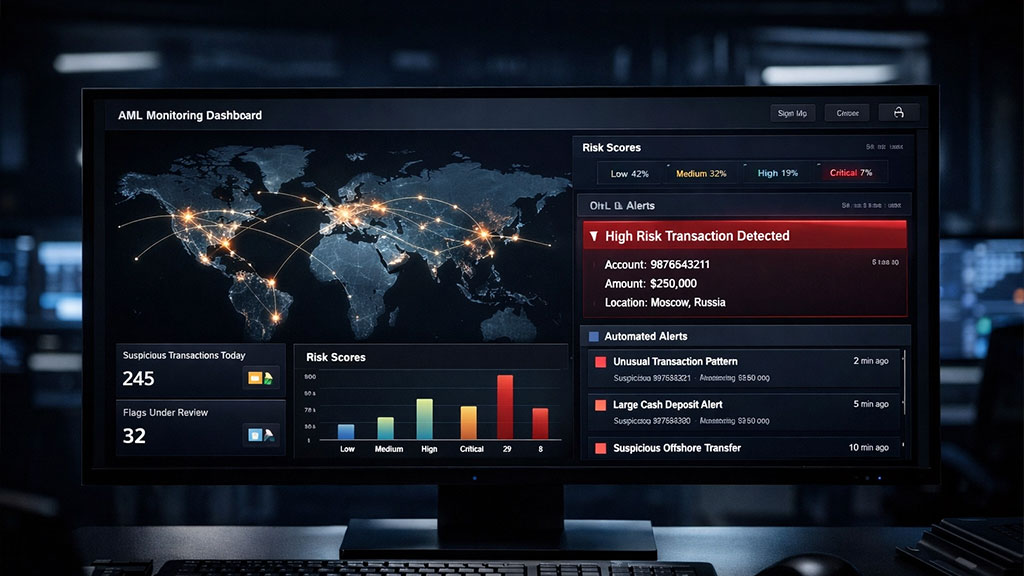
The responsible gambling AI tools deployed in 2026 represent a generational leap in player protection capability. Over 70 percent of players who engaged with AI-powered intervention prompts reported feeling more aware of their spending limits, according to operator-reported survey data. As regulatory mandates expand and cross-operator data standards mature, these systems will become as fundamental to iGaming compliance as KYC checks and anti-money-laundering screening are today.






Crypto vs E-Wallet Casino Withdrawals: Speed, Fees, Risks Compared

Responsible Gambling Controls in Regulated Markets (UK/AU) and How They Work

10 Best Online Casino Singapore Sites Ranked and Reviewed

Name Mismatch: Why Wallet/Bank Names Must Match Casino Profiles

Best Casino Withdrawal Methods (Speed, Fees, Safety Compared)

AML in iGaming: Common Red Flags That Trigger Reviews

8 Nhà Cái Uy Tín Nhất Hiện Nay Tại Việt Nam Với Ưu Đãi Tặng Tiền Và Tỷ Lệ Cược Hấp Dẫn

How Online Gambling Payments Work Online

Free Credit No Deposit Casino Malaysia 2026: How to Claim RM20+ Bonuses at Trusted Online Casino Sites
