
How Online Gambling Payments Work Online


Online gambling can appear simple at first glance. A player typically selects a casino, creates an account, deposits funds, and begins playing. Behind these actions, a full payment system operates in the background. When payment rules are unclear, players can run into delays, extra fees, or withdrawals that require additional checks.
This article focuses on how payment systems affect the player experience. The goal is to explain what typically happens before and after a deposit, so payment steps and timelines are easier to understand. The article examines online gambling payment methods, casino deposits and withdrawals, payment processing systems, and the main factors that influence how funds move within gambling platforms.
It also describes how payment systems operate, how financial institutions process gambling transactions, and how regulations influence payment flows.
Why Online Gambling Payments Matter to Players
Before any deposit is made, it helps to understand how the payment system usually works. Many players focus only on games and bonuses. This can lead to confusion about how deposits, withdrawals, and payment rules work.
Payment systems are only one part of the wider platform structure, and readers who want the bigger picture can also refer to this guide to online gambling.
Payments affect:
- How quickly a player can begin playing
- How funds are protected during transactions
- How long withdrawals take to process
- How fees affect the final balance
- Whether an account requires verification checks
When payment rules are explained clearly in advance, the overall process tends to be easier to understand.
How Online Gambling Payments Work Behind the Scenes
In many systems, the casino credits the player balance after authorisation, even though the final settlement between banks happens later. This process is often described as gambling payment processing.
Here is the simple flow:
- A player selects a payment method
- Payment details are entered through the casino cashier interface
- The casino sends the request to a payment gateway or processor
- The payment network (such as Visa or Mastercard) routes the request
- The player’s bank or wallet provider reviews and approves the transaction.
- The funds appear in the player’s casino account.
Withdrawals follow a similar path, but with more checks. This process is designed to protect both the player and the operator, although it also introduces additional rules, limits, and waiting periods.
Before a withdrawal is sent to a payment provider, the operator usually performs internal account checks to confirm identity verification, account ownership, and transaction history.
Payment systems are one part of the wider technical environment of online casinos, which also includes game software and platform architecture.
Key Gambling Payment Terms Explained Simply
Online gambling payments often involve several parties. A payment gateway or processor routes the request, the acquiring bank supports the merchant side, and the issuing bank decides whether a card payment is approved. Card payments also have two stages: authorisation (a real-time approval) and settlement (when funds are actually transferred).
In many online casinos, payment processing is handled by specialised payment service providers (PSPs). These companies connect the casino platform with banks, card networks, and digital wallet systems. The PSP manages how the transaction is routed, checks the payment for potential fraud, and helps complete settlement between financial institutions after the payment is approved.
Why Banks Handle Gambling Payments Differently
Card networks and banks classify gambling transactions using merchant category codes (MCC). In many payment systems, gambling transactions are commonly coded under MCC 7995 in Visa’s merchant standards, although other gaming MCCs may also appear depending on the product, network, and merchant setup. Issuers may then apply extra controls, restrictions, or decline rules based on their own policies and local requirements.
Casino Deposits vs Withdrawals: Key Differences Explained
Casino deposits and withdrawals describe the two directions money moves within an online casino account. A deposit is the act of adding funds to a casino account so bets or games can be placed. This is usually done through payment methods like credit or debit cards, e-wallets, bank transfers, or cryptocurrencies. Deposits are often processed quickly, although timing can vary depending on the payment method and the approval process used by the bank or payment provider, and many casinos offer bonuses or promotional credits when funds are added to a player account.
A withdrawal, on the other hand, is when funds or winnings are transferred out of a casino account and sent to a selected payment method. Withdrawals may take longer to process because operators often apply security, payment-method, and compliance checks before release, even though identity verification in some regulated markets may already have taken place earlier in the account journey. In simple terms, deposits add funds to a casino account, while withdrawals move money out of it.

Online Gambling Payment Methods: How Each One Works
One of the first choices players face is selecting a payment method. Each option works differently and affects how transactions are processed.
Credit & Debit Cards (Visa, Mastercard, etc.)
Credit and debit cards (such as Visa and Mastercard) allow funds to be deposited directly from a player’s card into a gambling site. Credit and debit cards are among the most common payment methods used on gambling platforms, and deposits are often authorised quickly once the bank approves the transaction.
However, withdrawals may not always be returned directly to a card. On many platforms, withdrawals are first routed back to a previously used deposit method where the operator and payment rails support that flow.
Some banks also block gambling transactions, and some credit cards may treat gambling payments as cash-advance transactions. Cards remain one of the most common payment methods because they are widely accepted and familiar to users.
E-Wallets (Skrill, Neteller, and approved PayPal use in some legal markets)
E-wallets are digital accounts that sit between a player’s bank or card and the gambling site. Instead of sending money directly from a bank account, the user moves funds into the e-wallet first and then uses that balance to make a deposit.
In many online casinos, deposits through e-wallets are processed quickly once the payment is approved. Withdrawals may also move faster than some traditional banking methods, although this depends on the platform and the operator’s internal review process.
Another feature of e-wallets is that they reduce the amount of financial information shared directly with the gambling site, because the wallet acts as an intermediary service. Availability can vary by country and by operator, and some providers allow gambling-related transactions only for approved merchants in certain legal markets.
- Why E-Wallet Deposits or Withdrawals Fail
E-wallet payments are often used because they can add speed and reduce the amount of card or bank information shared directly with a gambling platform. However, they can still run into problems. An e-wallet withdrawal may fail if the wallet account name does not match the casino account name, if the wallet has gambling-related restrictions in that market, or if the operator does not support payouts to that wallet.
In some cases, an e-wallet may be one of the faster withdrawal methods, but speed still depends on operator review, account checks, and whether the wallet is approved for gambling use in that jurisdiction. Compared with standard bank transfers, wallets may feel quicker at the user level, but they do not remove compliance checks or operator approval steps.
In practice, an e-wallet withdrawal failed result is often linked to account-name mismatch, wallet restrictions, or unsupported payout routing rather than a simple technical fault. Because some wallets support quicker payout routing than standard card rails, they are often discussed as one of the fastest withdrawal methods, although actual timing still depends on operator review and local availability.
Bank Transfers (Local or International)
Money moves directly between a player’s bank account and the gambling site, often offering higher limits, bank-level controls, and suitability for larger withdrawals. Traditional bank transfers are often slower than cards or wallets, but this is not always the case, because some instant banking and open-banking systems can support much faster deposits and payouts. Processing times can also vary based on the bank, the operator, the payment provider, and whether additional checks apply.
For that reason, bank-based payments may be used for both larger withdrawals and faster pay-by-bank flows, depending on the market, the provider, and the setup used.
Prepaid Cards & Vouchers (Paysafecard)
A prepaid voucher is purchased and the code is entered online, which means no bank account or card details are required, making it easier to control spending and widely available in stores; however, voucher-based use is usually deposit-focused, while payout options depend on whether an account-based product is supported, and some products may charge fees if unused for too long.
Because prepaid vouchers do not require bank or card details, they are sometimes used in situations where players choose not to share financial information directly with a gambling platform.

Cryptocurrencies (Bitcoin, Ethereum, etc.)
This method allows deposits and withdrawals through cryptocurrency wallets without using traditional banking systems. Crypto deposits and withdrawals can reduce the need to share card or bank details with an operator, but privacy and speed vary by network and platform.
Public blockchains can be highly transparent, and many gambling platforms still apply identity checks depending on licensing and policy.
However, several limitations exist. Cryptocurrency prices can change quickly, users must understand how wallets and private keys work, and many gambling platforms still do not support crypto payments.
- Crypto Payment Delays, Wrong Networks, BTC vs USDT
Crypto payments work differently from card and bank payments, so the failure points are also different. A crypto withdrawal delay can happen when the network is congested, when more blockchain confirmations are required, or when the operator has not yet released the transaction. Mistakes can also happen before the transfer is even processed. If a user selects the wrong network, enters the wrong address, or sends funds in a format the platform does not support, recovery may be difficult or impossible. There is also a practical difference between BTC vs USDT in gambling payments. Bitcoin is more exposed to price swings and network-fee changes, while USDT is often used when users want a value that tracks fiat more closely. Even so, neither option removes the need for account checks where licensing rules or operator policies require them.
Mobile Payments (Apple Pay, Google Pay, SMS)
Mobile payments allow deposits to be made through a smartphone or mobile wallet without manually entering card details. These systems are designed to complete transactions quickly through the device’s built-in payment functions.
Deposits are often authorised quickly, and Apple’s payment authorisation documentation shows how security features such as biometric authentication (fingerprint or facial recognition) may be used to confirm the payment.
However, there are some drawbacks to consider, including limited withdrawal options compared to traditional banking methods, lower transaction limits that may not suit high-stakes users, and the fact that it is not universally supported across all platforms or regions.
Pay-by-Phone / Carrier Billing
Carrier billing allows a payment to be charged directly to a mobile phone bill instead of using a bank account or card. The transaction is handled through the mobile network operator rather than a traditional payment processor.
However, carrier billing often has lower spending limits than most other payment methods, and it is usually limited to deposits rather than withdrawals. Transaction costs and limits can vary depending on the mobile network operator.
Common Online Gambling Payment Problems
Payment issues are one of the most common sources of confusion in online gambling because the deposit path and the withdrawal path are not reviewed in the same way. A payment pending or deposit pending status may appear when the bank, wallet provider, or payment processor has not finished its checks, when the operator is waiting for confirmation, or when the payment method is temporarily unavailable.
A withdrawal pending status can happen when the operator still needs identity documents, payment-method ownership checks, or extra fraud and AML review. A withdrawal rejected result may appear when account details do not match, when the selected method does not support payouts, when payment limits apply, or when the operator returns funds to an earlier verified method under its payment rules. These differences help explain why gambling payment processing can feel simple at deposit stage but much slower during cashout.
How Gambling Payment Problems Are Usually Handled
When a gambling payment fails, the next step depends on where the problem happened. A deposit declined or payment declined result may come from the bank, the card issuer, the wallet provider, or the operator’s payment processor. A payment pending status may clear on its own if the provider is still confirming the transaction, but it can also end in failure if the approval does not complete.
On the withdrawal side, operators usually review account identity, payment-method ownership, transaction history, and any risk or compliance flags before funds are released. If a payout cannot be sent to the selected method, the operator may return it to an earlier verified method or ask for a different verified route in the same account name. This is why two payment problems that look similar on the surface can be handled in very different ways behind the scenes.
Quick Comparison Table: Online Gambling Payment Methods Compared
The table below shows broad patterns rather than fixed rules. Actual speed, payout support, privacy, limits, and review requirements depend on the operator, jurisdiction, payment provider, and account status.
| Method | Deposit Speed | Withdrawal Speed | Privacy | Payment Limits |
| Cards | Usually fast | Often slower | Low | Medium |
| E-Wallets | Usually fast | Often faster | Medium | Medium |
| Bank Transfer | Can be fast or delayed | Can be fast or delayed | Low | High |
| Prepaid | Usually fast | Often limited or unavailable | High | Low |
| Crypto | Can be fast | Can be fast | Variable | High |
| Mobile Pay | Usually fast | Often limited | Medium | Low |
Common Fees in Online Gambling Payments Explained
Fees can reduce the final amount a player receives after a withdrawal.
Common fee types:
- Transaction fees
- Currency conversion fees
- Withdrawal processing fees
Some casinos absorb payment fees, while others pass them on to players. Clear fee disclosure is commonly seen on regulated or transparent platforms. When fee terms are difficult to locate, confusion can occur during deposits or withdrawals.
How Payment Times, Fees, and Limits Work Together
Payment speed is only one part of the overall picture. A method that looks fast at deposit stage may still be slower at withdrawal stage if it triggers more checks, has weaker payout support, or depends on a provider with stricter routing rules. Fees and limits also shape the real outcome. A method with a higher limit may suit larger withdrawals but take longer to process, while a faster method may have lower caps or more restricted payout options. This is why payment comparisons work best when they are read as system patterns rather than fixed promises.
Why Online Casinos Require KYC Verification
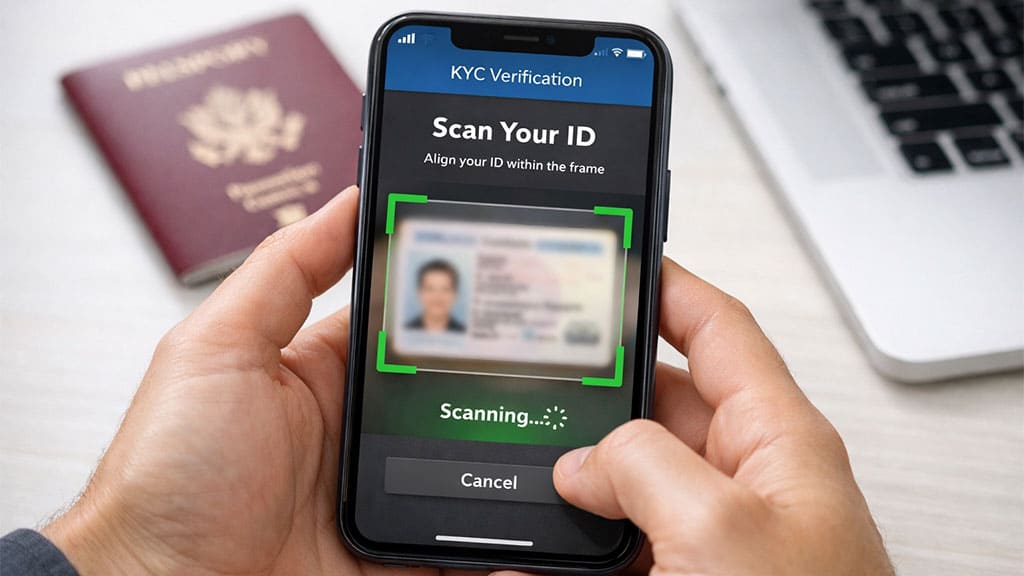
KYC stands for Know Your Customer. For licensed operators in many jurisdictions, identity checks are a standard part of account setup, account use, and withdrawals.
What casinos usually ask for:
- ID document
- Proof of address
- Payment method proof
Why KYC exists:
- Stop fraud
- Prevent money laundering
- Protect players
- Follow legal rules
Verification may be requested at different points in the account journey depending on the market, the operator, and the checks triggered on the account, although some regulated markets require identity verification before gambling begins.
Why Casinos Require the Same Payment Method for Withdrawals
Many operators use a ‘closed-loop’ approach, where withdrawals are routed back to the funding method first, based on internal controls and payment rules. This is often described as a same payment method withdrawal rule, although the exact process depends on the operator and the payment rails involved.
This rule exists to:
- Prevent fraud
- Follow money laws
- Protect both the player and the operator
If a withdrawal method does not match the funding method, the operator may require the payout to be routed to a verified method in the account holder’s name, depending on the platform’s closed-loop rules.
Compliance Checks That Affect Casino Payments and Withdrawals
Payment reviews are not limited to simple identity checks. In regulated environments, operators may also monitor transactions for AML risk, AML triggers, source of funds concerns, unusual account activity, payment-method ownership issues, or terms linked to fraud, collusion, or bonus abuse. In some cases, a basic review can turn into enhanced checks if the transaction pattern, funding level, or account behaviour creates additional questions.
These checks do not happen in exactly the same way on every platform, but they help explain why some accounts are asked for extra documents, why some withdrawals are paused, and why payment choices can become more limited after a review begins. In some cases, the result of that review is not only a delayed payout but also an account restricted status until the requested checks are completed.

What Affects Online Gambling Payment Methods
Several factors affect how payment methods operate within online casino platforms:
- Deposit speed – Instant vs delayed
- Withdrawal time – Some methods are faster withdrawal times than others
- Fees – Transaction, conversion, or withdrawal fees
- Security – Encryption and fraud protection
- Privacy – How much identity or financial information the payment method requires
- Availability – Regional restrictions and site compatibility
Payment processing also supports different casino activities, where wagers and payouts move through the same account balance system.
How Payment Methods Are Usually Compared
Payment methods are usually compared by looking at several factors together rather than focusing on one feature alone. Deposit speed may matter at the start, but withdrawal support, review time, payment limits, fees, and account checks often have a bigger effect once funds need to move back out.
Privacy also works differently from one method to another. A wallet may reduce the amount of card or bank data shared with the operator, while a bank-based method may offer stronger account matching and clearer payout routing. This is why the same payment method can feel simple in one case and restrictive in another.
Related Payment Topics in Online Gambling
Some payment questions are not tied to one method, but to how the system behaves in general. Issues such as withdrawal pending, payment pending, rejected payouts, and account limits often come from how transactions are reviewed and processed rather than the method itself. These topics are explained in more detail in this section on common payment issues.
The main payment flow only explains part of the picture. Some issues become clearer when they are looked at through the payment method itself. Wallet-based deposits and withdrawals often involve questions about speed, account-name matching, failed payouts, and how e-wallets compare with bank transfers. These topics are covered in more detail in this section on e-wallet and gambling payment methods.
Other payment issues come from the checks around the transaction rather than the payment method itself. KYC, AML triggers, source of funds reviews, account restrictions, and bonus-abuse checks can all affect how quickly money moves through a gambling account. These are explained further in this section on payment compliance and verification.
Crypto gambling payments follow a different path from card and bank transactions. Questions about BTC vs USDT, transfer delays, fees, wrong networks, and privacy limits usually need a separate explanation because the failure points are not the same as in fiat payment systems. These are explored further in this section on crypto and iGaming payments.
Why Payment Method Availability Changes by Market
Payment methods do not appear in the same way on every gambling platform. Availability can change based on local law, licensing conditions, banking support, payment-provider policy, and the operator’s own setup. A method that works in one country may be restricted, unsupported, or subject to extra checks in another.
This is also why some wallets, bank-based systems, or mobile payment tools appear only in certain legal markets. In practice, payment availability is shaped by both regulation and commercial payment routing, not just by user preference.

Responsible Gambling Tools Linked to Payments
Payment methods can change how easy it is to add funds, how quickly balances move, and how spending is tracked. Many regulated operators also provide account tools such as deposit limits or cooling-off settings as part of their responsible gambling framework.
Online Gambling Payment Rules in Malaysia and Singapore
Rules for online gambling payments vary by jurisdiction. In Singapore, gambling regulation sits under the Gambling Control Act 2022 and is overseen by the Gambling Regulatory Authority. In Malaysia, gambling-related enforcement is shaped by longstanding statutes such as the Common Gaming Houses Act 1953 and the Betting Act 1953, together with other laws, licensing structures, and enforcement practices that affect how gambling activity is treated.
Online Gambling Payment FAQs and Common Questions
Why do casino withdrawals take longer than deposits?
Why are some gambling payments declined by banks?
Why was a deposit declined even though the payment method works elsewhere?
Why is a withdrawal pending for so long?
Why was a withdrawal rejected?
Do all payment methods support withdrawals?
Are crypto gambling payments anonymous?
Conclusion: Understanding Online Gambling Payments in Context
Understanding online gambling payments means looking beyond the deposit button. Deposits, withdrawals, fees, verification checks, payment limits, and payout rules all shape how money moves through a gambling account. Cards, wallets, bank transfers, prepaid methods, and crypto payments each follow different approval paths and can fail for different reasons.
When payment rules, review steps, and method limits are explained clearly, it becomes easier to understand why delays, rejected withdrawals, or extra checks may happen.





10 Best Online Casino Singapore Sites Ranked and Reviewed

Name Mismatch: Why Wallet/Bank Names Must Match Casino Profiles

Best Casino Withdrawal Methods (Speed, Fees, Safety Compared)

AML in iGaming: Common Red Flags That Trigger Reviews

8 Nhà Cái Uy Tín Nhất Hiện Nay Tại Việt Nam Với Ưu Đãi Tặng Tiền Và Tỷ Lệ Cược Hấp Dẫn

How Online Gambling Payments Work Online

Free Credit No Deposit Casino Malaysia 2026: How to Claim RM20+ Bonuses at Trusted Online Casino Sites

Esports Betting Guide: How It Works and Risks

Best E-Wallet Casinos in Malaysia (April 2026): Complete Guide to TNG, GrabPay, and Secure Deposits
