
Senate Sports Betting Disclosure Deadline Pressures Major US Leagues

By Sarah Mitchell, Senior Gaming Correspondent
Senate sports betting disclosure demands are rattling every major professional league in the United States this April. Senator Richard Blumenthal of Connecticut has sent formal letters to the NFL, NBA, MLB, NHL, MLS, and NCAA, requesting comprehensive documentation of every gambling and prediction market partnership each league has entered. The May 1 deadline leaves little room for delay, and the scope of the inquiry signals a broader federal appetite for transparency in an industry that generated over $120 billion in legal wagers last year.
Senate Sports Betting Disclosure Deadline Targets Six Leagues
Blumenthal’s letters, dated April 9, demand that each league disclose the full scope of its financial arrangements with sportsbooks, data providers, and prediction market exchanges. The senator specifically cited the MLB’s branding deal with Polymarket and FanDuel as examples of partnerships that effectively place the league’s stamp of approval on gambling activity. In his communication to MLB Commissioner Rob Manfred, the arrangements make it nearly impossible for fans to experience live sports without encountering gambling promotions during broadcasts and stadium visits.
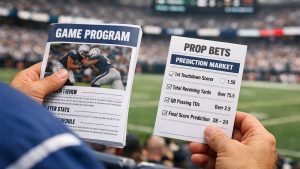
The request extends beyond traditional sportsbook relationships. Blumenthal wants detailed accounting of revenue-sharing agreements tied to real-time data feeds, including the micro-betting and prop bet products that operators build from official league statistics. For the NCAA, the inquiry carries extra weight because college athletes remain barred from wagering on their own sports, yet the association’s data partnerships indirectly fuel the very betting markets that surround their competitions.
Prediction Markets Deepen the Regulatory Tangle
The senate sports betting disclosure push arrives at a moment when the line between prediction markets and traditional sports wagering has never been blurrier. A Third Circuit federal appeals court ruling in early April held that the Commodity Exchange Act preempts state gambling laws when applied to CFTC-registered contracts tied to sporting events. That decision, which originated from New Jersey’s attempt to block Kalshi from offering NFL and NBA contracts, created a regulatory gap that both Blumenthal and the leagues want addressed before it widens.
Three leagues have signed prediction market partnerships in the last six months alone. The MLS, NHL, and MLB each entered agreements with exchange platforms that allow fans to trade contracts on game outcomes, series results, and individual player performances. The NFL and NCAA have publicly resisted, with Commissioner Roger Goodell writing to CFTC Chairman Rostin Behnam in mid-April asking the agency to declare certain sports event contracts contrary to the public interest. For bettors across regulated markets like Malaysia, these federal developments in Washington often ripple outward, shaping how international operators structure event-based wagering products globally.
Industry Response Splits Along Familiar Lines
The American Gaming Association has urged Congress to clarify the legislative boundary between derivative contracts and sports wagers. AGA president Bill Miller warned that regulatory ambiguity invites exactly the kind of aggressive product expansion that critics fear, while simultaneously preventing state regulators from exercising meaningful oversight. His position aligns with Blumenthal’s on one specific point: the current patchwork of federal and state authority is unsustainable.
Operators are watching the senate sports betting disclosure requests with cautious concern. DraftKings, FanDuel, and BetMGM each hold partnerships with at least one major league, and their data licensing arrangements represent both a competitive advantage and a potential liability if Congress decides those deals need tighter regulation. Analysts at Macquarie Group flagged the inquiry in a client note, estimating that new transparency requirements could add compliance costs of between two and four percent of US revenue for the largest operators.
What Comes After the May 1 Deadline
Blumenthal has not specified what legislative action he intends to pursue once the leagues respond. But his office has signaled that the senate sports betting disclosure exercise could inform new legislation targeting three areas: mandatory cooling-off periods for in-play betting products built on league data, restrictions on gambling branding at collegiate sporting events, and federal oversight of prediction market contracts that functionally replicate sports wagers.
The broader context matters here. State legislatures in Maryland, Minnesota, and Vermont are already advancing their own prediction market ban bills, while Colorado, Connecticut, and Massachusetts are considering sportsbook advertising restrictions. The federal layer added by this senate sports betting disclosure effort marks a significant escalation in a regulatory conversation that has been dominated by state-level action since the Supreme Court struck down PASPA in 2018. Whether the May 1 deadline produces meaningful transparency or simply generates a filing exercise will depend on how candid the leagues choose to be and how aggressively Congress follows up.
For now, the countdown is concentrating minds across professional sports, sportsbook boardrooms, and Capitol Hill alike. The full text of Blumenthal’s letters to the leagues makes clear that the era of quiet handshake deals between leagues and betting operators is drawing to a close.






Best Casino Withdrawal Methods (Speed, Fees, Safety Compared)
AML in iGaming: Common Red Flags That Trigger Reviews

How Online Gambling Payments Work Online

Free Credit No Deposit Casino Malaysia 2026: How to Claim RM20+ Bonuses at Trusted Online Casino Sites

Esports Betting Guide: How It Works and Risks

Best E-Wallet Casinos in Malaysia (April 2026): Complete Guide to TNG, GrabPay, and Secure Deposits

Best E-Wallet Casinos in Malaysia (2026 Guide)

Top 7 Best Casino Welcome Bonuses in Malaysia (2026)

How Online Sports Betting Really Works
