
Why Your E-Wallet Withdrawal Failed

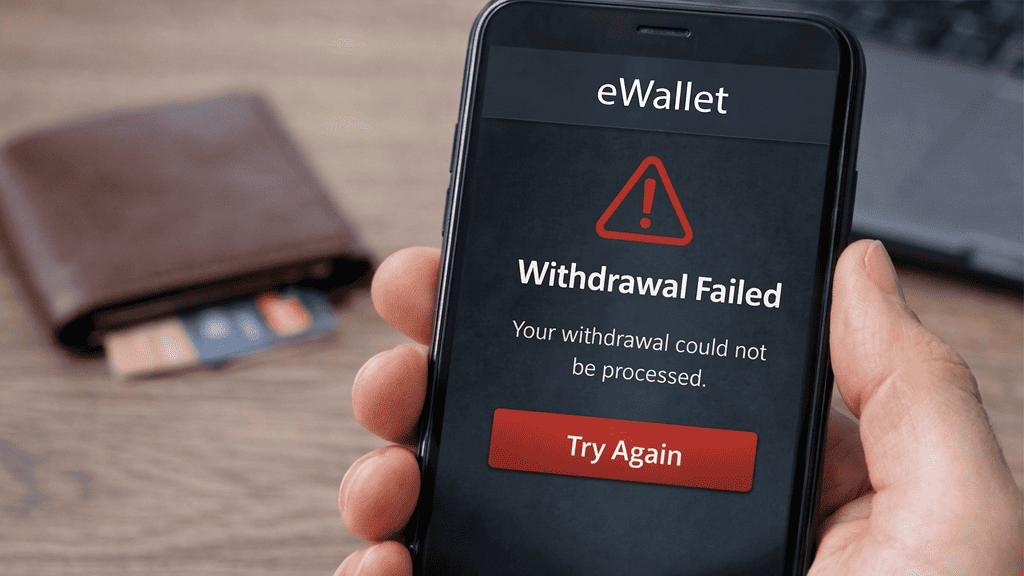
In online gambling and digital payments, e-wallets are a common way for players to move money in and out of their accounts. Withdrawals do not fail at random.
Most failed e-wallet withdrawal cases are linked to limits, account-detail mismatches, identity checks, provider rules, or payment-processing delays. This guide explains the main reasons a withdrawal declined, withdrawal pending, or failed withdrawal result may appear, and outlines the usual checks that help players fix the issue and reduce repeat problems.
Quick Check: What Type of Withdrawal Problem Is This?
Not every withdrawal problem means the same thing. A failed e-wallet withdrawal, a withdrawal pending status, and a withdrawal under review message can point to very different issues. A failed or declined withdrawal often means the request did not meet one or more payment or verification rules. A pending withdrawal usually means the request is still being processed. A withdrawal under review often means extra checks are being carried out before the funds are released. Knowing which status appeared first can make the cause easier to identify.
How E-Wallet Withdrawals Work
E-wallets, also known as digital wallets, are used by many players because they can separate gambling payments from a bank card or bank account. Services such as Skrill, Neteller, and ecoPayz are commonly used in this space, while PayPal availability depends on merchant approval and legal jurisdiction. These providers act as payment intermediaries, but payout speed still depends on the casino, the wallet provider, the withdrawal route, and any checks triggered during processing. Exact withdrawal rules can vary by operator, payment provider, payout route, and jurisdiction.
Despite their efficiency, withdrawals through e-wallets are not free from problems. A request can be delayed, declined, or held because of technical issues, account-detail mismatches, or compliance checks. Understanding how the payment flow works makes it easier to see where the problem began.
How the E-Wallet Withdrawal Process Actually Works
- Request Initiation – A player submits a withdrawal request through the gambling platform and selects an approved payout method already linked to the account.
- Verification and Processing – The operator reviews account status, withdrawal rules, and any verification requirements that apply to the request.
- Transaction Routing – If approved, the payment is sent through the selected wallet or banking channel, where extra checks may still apply.
- Completion, Delay, or Failure – Some payouts are fast, but others take longer depending on the method, provider rules, currency, bank processing, and security or compliance checks.
Top Reasons an E-Wallet Withdrawal Can Fail or Stall
There is no single reason for a failed e-wallet withdrawal. In practice, these problems usually fall into several groups, including transaction limits, account-detail mismatches, KYC or identity verification issues, technical delays, and security reviews.
Transaction Limits
One of the most common reasons for withdrawal failures is exceeding transaction limits, although fee-related deductions and payout costs may also matter in some cases, as shown in this casino deposit and withdrawal fees comparison. Casinos and e-wallet services both impose limits to manage risk and comply with financial regulations. Understanding these limits can prevent failed transactions.
Casino-Imposed Limits
Casinos often set both minimum and maximum withdrawal amounts:
- Minimum Withdrawals: Some casinos require a minimum amount to process a withdrawal. Attempting to withdraw below this amount can lead to rejection.
- Maximum Withdrawals: High-value withdrawals may be restricted to prevent fraud or money laundering. Large withdrawals may need additional verification or may be split across multiple transactions.
E-Wallet Limits
E-wallet providers also set limits based on account verification level:
- Unverified Accounts: May have daily, weekly, or monthly limits. These are often quite low to reduce risk.
- Verified Accounts: Limits increase significantly once the player has completed the provider’s verification process.
- Currency and Region Differences: Some e-wallets enforce stricter limits depending on the user’s country or the currency being used.
Cumulative Limits
- In some cases, failed withdrawals are caused by exceeding cumulative limits. For example, if a player withdraws multiple times in a short period, the total amount may surpass the allowed threshold even if individual withdrawals are within limits.
Solutions:
- Withdrawal amounts should remain within both casino and e-wallet limits.
- Large withdrawals may need to be split into smaller amounts to fit daily or weekly limits.
- Completing e-wallet verification before a high-value withdrawal can increase the allowed limit.
- Checking whether the withdrawal currency or region has stricter limits can help prevent failure.
Name Mismatches and Account Detail Problems
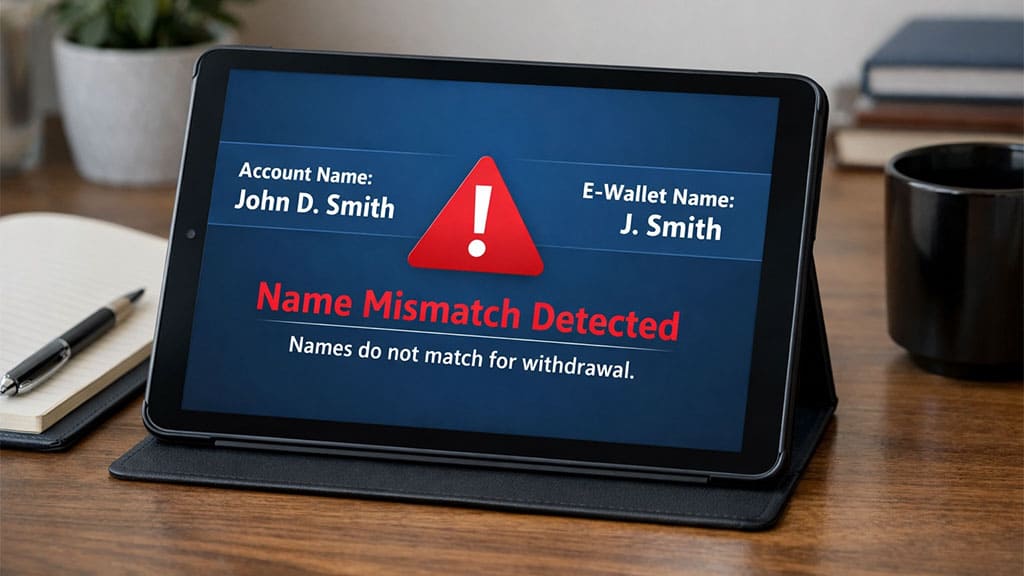
Another common reason a withdrawal fails is that account details do not match across the gambling account, the e-wallet, and any linked bank account. In some cases, the problem is not only a name or detail error, but also a payment method mismatch, such as trying to withdraw through a route that is not approved for that account. Name differences, wrong email details, and incorrect account information can all interrupt payment processing.
Exact Name Requirement
- Many e-wallet withdrawals depend on the account details matching the registered information closely enough for the payment to pass review.
- If the casino records “John A. Smith” and the e-wallet account is “John Adam Smith,” the withdrawal may fail.
Email and Account ID Errors
- Some e-wallets link accounts primarily to an email address or unique account ID.
- If a player enters the wrong email, the system may reject the withdrawal.
- Users often overlook simple typing errors that can cause a withdrawal to fail.
Linked Bank Account Issues
- For e-wallets that require linked bank accounts, name mismatches between the bank and e-wallet can also trigger failure.
- Some providers may block or delay withdrawals if the bank account name differs, even when the e-wallet account itself appears correct.
Solutions
- Names, email addresses, and account IDs need to match across the casino account, the e-wallet, and any linked bank accounts.
- Small differences in spelling, punctuation, or name order can lead to rejection or review.
- Updating account information before a withdrawal is requested can help resolve these mismatches.
KYC (Know Your Customer) Compliance
KYC is a regulatory requirement designed to prevent money laundering, fraud, and underage gambling. Casinos and e-wallet providers may require identity verification before or during withdrawal processing, depending on their rules and legal obligations. A delayed or blocked payout may also happen when a routine KYC check has not been completed or when the submitted documents do not fully support the account details.
Missing or Incomplete Documents
- Players may need to submit government-issued ID, proof of address, or other verification documents.
- Failure to provide these documents, or submitting incomplete files, can block withdrawals.
Document Mismatch
- If the submitted documents do not match the registered account information, the verification process may fail.
- The discrepancies in ID numbers, expiration dates, or addresses are common triggers.
Timing of KYC Verification
- Verification is not handled at exactly the same point by every operator. Some checks are completed early in the account journey, while others are triggered when a withdrawal, risk review, or legal requirement creates the need for more evidence. If verification is still pending, a withdrawal may be held until the documents are reviewed and accepted.
Solutions
- KYC documents are less likely to cause delays when they are submitted in advance and kept up to date.
- Verification problems are more common when the submitted documents do not match the registered account information.
- Early completion of the casino’s KYC process can reduce the chance of delay at withdrawal stage.
Technical and Operational Issues
Technical issues can also interrupt a withdrawal, even when account details are correct. Examples include temporary platform errors, service downtime, bank-routing issues, foreign-exchange handling, or limits tied to the user’s country or withdrawal route.
Server and Network Errors
- Slow or interrupted internet connections can sometimes cause transaction requests to fail.
- Casino servers or e-wallet systems may occasionally experience downtime, delaying withdrawals.
Currency Conversion and Regional Restrictions
- Some e-wallets require currency conversion before completing a withdrawal.
- Regional restrictions may prevent withdrawals from certain countries, or require additional documentation for cross-border transfers.
Software Bugs or System Updates
- Device-side issues can also affect a withdrawal request. Outdated apps, browser problems, or unstable internet connections may interfere with submission, but these are best treated as possible causes rather than assumed causes in every failed transaction.
Solutions
- A stable internet connection and awareness of known maintenance periods can help reduce avoidable submission problems.
- Checking that the e-wallet supports the intended currency and region can help prevent rejected conversions.
- Updating apps, clearing browser cache, and using current platform versions can help reduce software-related errors.
Security Flags and Fraud Prevention
E-wallets and casinos use automated systems to detect suspicious activity. Withdrawals may fail if the system flags a transaction as unusual or high risk.
Unusual Withdrawal Amounts
- Sudden large withdrawals from a previously low-activity account may trigger security checks.
- Repeated rapid withdrawals within a short timeframe can also be flagged.
Unusual Login Locations
- Logging in from a new device, IP address, or country can trigger extra checks and may delay or hold a withdrawal until the activity is reviewed.
- Some e-wallets require additional verification for transactions from new locations.
Account Restrictions
- Accounts with unresolved disputes, chargebacks, or suspected fraudulent activity may have withdrawals blocked.
- These issues usually require support team intervention.
Solutions
- Large or unusual withdrawals can trigger security holds and extra review by the operator or payment provider.
- Changes in usual devices, login patterns, or account behaviour can increase the chance of additional checks.
- Repeated rapid withdrawals may also raise fraud-prevention flags.
- Existing account restrictions or disputes can block withdrawals until the issue has been reviewed and resolved.
How to Reduce the Risk of E-Wallet Withdrawal Failure
Failed e-wallet withdrawals are often linked to checks that can be reviewed in advance, so a simple review process can help:
- Check Transaction Limits – Daily, weekly, or monthly e-wallet withdrawal limits can affect whether a payout request goes through. Large amounts may need to be split where the provider allows it.
- Verify Account Information – Names, email details, and linked bank details need to match across the gambling account and payment account. Small mismatches can delay review or cause rejection.
- Complete Account Verification Early – Identity verification and address documents are often easier to deal with before the first cash-out request is made.
- Review Transaction Details – The payout method, amount, currency, and account details all need to be correct before the request is submitted.
- Check Regional or Currency Rules – Availability can vary by country, currency, and withdrawal route, so unsupported combinations may fail.
- Watch for Security Reviews – New devices, unusual activity, or sudden large requests can trigger extra checks.
- Prepare for Support – If the request stays blocked, the most useful details usually include the transaction ID, screenshots, and the exact error message.
These steps do not guarantee approval, but they can reduce avoidable delays and make the cause of a withdrawal problem easier to identify.
When to Contact Support About a Failed Withdrawal
Support may be necessary when the same withdrawal fails more than once after the account details, verification status, and payment route have been checked. It may also be necessary when the withdrawal remains pending for longer than the stated processing window, when the account shows a restriction, or when part of the balance appears to be missing. In these cases, the most useful details usually include the transaction ID, the exact error or status message, the time of the request, and screenshots showing the issue.
Key Takeaways on Failed E-Wallet Withdrawals
E-wallet withdrawals can fail for several reasons, including limits, account-detail mismatches, identity checks, technical delays, and security reviews. In many cases, the problem becomes clearer once the player checks the payment route, verification status, and exact error or hold message. The difference between a rejected request, a pending request, and a routine compliance hold can make the cause much easier to understand.
A clear payment guide helps readers understand how the system works, why delays happen, and which checks are commonly used to resolve a blocked withdrawal.







Crypto vs E-Wallet Casino Withdrawals: Speed, Fees, Risks Compared

Responsible Gambling Controls in Regulated Markets (UK/AU) and How They Work

10 Best Online Casino Singapore Sites Ranked and Reviewed

Name Mismatch: Why Wallet/Bank Names Must Match Casino Profiles

Best Casino Withdrawal Methods (Speed, Fees, Safety Compared)

AML in iGaming: Common Red Flags That Trigger Reviews

8 Nhà Cái Uy Tín Nhất Hiện Nay Tại Việt Nam Với Ưu Đãi Tặng Tiền Và Tỷ Lệ Cược Hấp Dẫn

How Online Gambling Payments Work Online

Free Credit No Deposit Casino Malaysia 2026: How to Claim RM20+ Bonuses at Trusted Online Casino Sites
