
What KYC Means in Online Casinos Explained

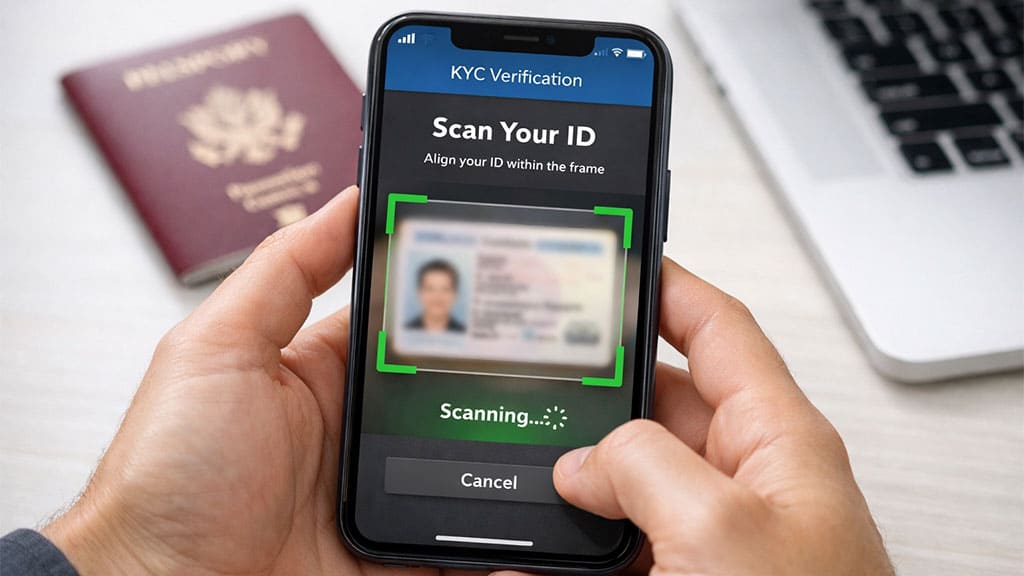
In the fast-growing world of online gambling, players often encounter a term that can be confusing at first: KYC, short for Know Your Customer. Many players wonder why online casinos ask for personal documents when account checks, payment reviews, or withdrawal verification begins.
This guide explains what KYC means, why online casinos ask for ID, and how verification usually works in gambling and payment checks.
What KYC Means in Online Casinos and Why It Matters
KYC stands for “Know Your Customer.” It is a standard verification process used by financial institutions, online services, and licensed gambling operators. The main purpose of KYC is to ensure that the person using a service is indeed who they claim to be.
In online casinos, KYC serves several essential functions:
- Identity Verification – Confirming that the player is a real person and meets legal age requirements.
- Fraud Prevention – Reducing the risk of stolen identities, account hacking, and fraudulent transactions.
- Regulatory Compliance – Ensuring that the casino follows laws related to gambling, anti-money laundering (AML), and responsible gaming.
From a technical standpoint, KYC involves collecting and verifying specific information from the player. This may include government-issued IDs, proof of address, and sometimes even proof of payment methods, similar to the document types gambling businesses can ask for.
The Three Pillars of KYC
KYC is often explained through three common parts:
- Identity collection: This is the first step, where the user provides details such as full name, date of birth, and address.
- Customer due diligence: The operator reviews the information provided and may use checks or tools to look for identity, fraud, or compliance risks.
- Ongoing monitoring: The process does not always end after the first review. Transactions and account activity may still be checked for unusual patterns.
Why Online Casinos Ask for ID and Verify Players
Online casinos ask for ID verification for several reasons. These checks are linked to age controls, fraud review, payment risk, and regulatory duties. Looking at each part helps explain why document requests are a normal part of many licensed systems.
Preventing Underage Gambling
One of the main reasons casinos perform KYC is to prevent underage gambling. Gambling access is age-restricted in many jurisdictions, though the exact minimum age varies by market and licence. KYC helps online casinos verify age by using documents or electronic identity checks, depending on the market and system used.
Through document verification, casinos may confirm a player’s age using official IDs such as passports, driver’s licences, or national ID cards. This helps reduce legal, regulatory, and account-related risk.
Combating Money Laundering
Money laundering is a critical concern in online gambling. Criminals might attempt to move illegal funds through casinos to disguise their origin. KYC helps identify users and trace transactions, making it harder for such activities to occur.
The technical side may involve electronic checks, document review, and risk tools that help flag unusual or suspicious activity. In many licensed markets, regulators expect identity and AML controls, although the exact trigger, scope, and handling vary by jurisdiction.
Ensuring Fair Play and Security
KYC can also support fraud controls linked to account misuse. Online casinos may use identity checks to reduce multiple-account abuse, bonus abuse, bot activity, and other forms of suspicious behaviour. These checks do not guarantee fair play, but they can help support account control and risk review.
Facilitating Secure Payments
Deposits and withdrawals are a core part of online gambling. KYC helps operators check whether a payment method appears to belong to the same person named on the account. When payment details match the verified account holder, operators can reduce some fraud and payment misuse risk.
For instance, without KYC, a player could deposit money using stolen cards, creating a legal and financial problem for both parties. Verification can help assess identity, payment ownership, and some source-of-funds risks directly.
How Online Casino KYC Checks Work Step by Step
The way a casino checks an ID is more complex than just a person looking at a photo. Most modern sites use automated software to speed up the process.
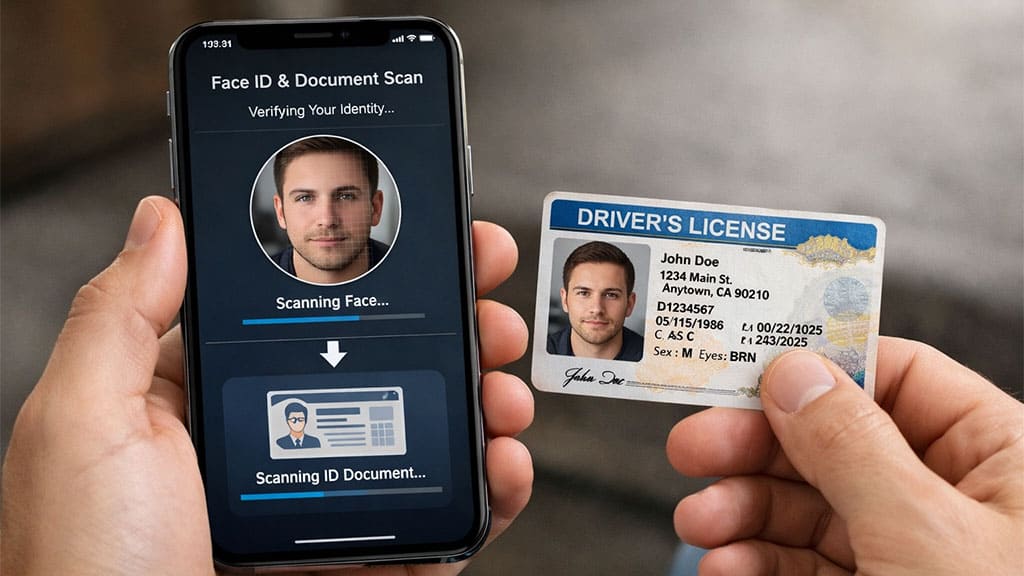
Step 1: Document Upload and OCR
When a user uploads an ID document, some systems use OCR (Optical Character Recognition) to read parts of the text automatically. This can help extract details such as the name, document number, or expiry date for review against account information.
Step 2: Biometric Face Matching
Many sites now ask for a selfie alongside the ID. In some systems, facial comparison tools are used during review to check whether the selfie appears to match the photo on the identity document.
Step 3: Database Cross-Referencing
The system may also check the user’s details against screening lists used for AML or compliance review. This can include sanctions-related screening or checks for politically exposed persons, often called PEPs. Being a PEP is not illegal, but it may lead to extra due diligence checks.
Step 4: Verification of Address
To help confirm where a user lives, casinos may ask for a utility bill or bank statement. Address checks can support identity review, residency checks, market access controls, and other compliance checks, depending on the operator and jurisdiction.
Types of KYC Checks Used by Online Casinos
Not all KYC processes are the same. Online casinos may use different levels of checks depending on the user’s activity, deposit amount, or local regulations. Common types include:
- Standard KYC: Basic verification may happen during registration, before gambling, before withdrawal, or when account risk triggers further review. It often includes identity details and sometimes proof of address.
- Enhanced KYC: Extra checks may be applied when account activity, transaction size, payment risk, or compliance review creates a higher-risk profile. Operators may then request more documents, such as:
-
-
- Recent bank statements
- Proof of source of funds
- Selfie with ID for facial recognition
-
- Ongoing or Periodic KYC: Some casinos perform periodic KYC checks to maintain compliance. Users may be asked to update documents regularly or verify changes in personal information.
In payment-related cases, online casino ID verification may also involve casino withdrawal verification, proof of payment, source of funds questions, or review of a payment method mismatch. These checks are often linked to account verification pending notices, KYC withdrawal delay, or withdrawal pending verification status messages.
Types of Documents Required
To explain the process clearly, it helps to look at the documents operators commonly request.
Passport or driver’s licence — usually requested as proof of identity.
Utility bill or bank statement — often requested as proof of address.
Card image or bank record — may be requested as proof of payment method ownership.
E-wallet screenshot or account record — may be requested to confirm the payment account name or registered details.
The exact documents and format can vary by operator, payment method, and jurisdiction.
Is Player Data Safe During Online Casino KYC Checks
One of the most common concerns among players is how their personal information is handled and whether it remains secure. When examining platform security, data in transit is usually protected with TLS, not the older SSL label. This technology protects sensitive data by scrambling it as it travels from a user’s device to the casino’s servers, making it extremely difficult for hackers to intercept or decipher.
Operators may use different storage and access controls for verification records, but the exact technical setup is not always disclosed publicly. What matters more is whether access is restricted, data is protected, and retention is handled under the operator’s legal and privacy duties.
Regulatory compliance also plays a significant role in safeguarding player data. Many countries apply privacy rules such as the GDPR, which requires data to be kept no longer than necessary, subject to legal retention duties. Closing an account does not always mean immediate deletion, because operators may still need records. This means operators still need a legal reason to keep personal data and are expected to follow privacy rules while doing so.
When Online Casinos Ask for KYC Verification
The timing of a KYC (Know Your Customer) check can vary by operator, payment flow, and regulation, but it often appears at a few common stages:
- Upon Registration: Some online casinos, especially in stricter licensed markets, require users to complete identity checks before they can access games or account features. This may involve ID, proof of address, or other documents at an early stage. Early verification can reduce some fraud and account misuse risk.
- Reaching a Deposit Limit: In some markets, extra checks may be triggered by spending levels, transaction patterns, or other risk indicators. This can form part of AML checks, source-of-funds review, or wider account risk controls.
- First Withdrawal: Historically, many operators waited until the first withdrawal, although stricter markets now often verify earlier. At this stage, the operator may pause the payout while it reviews identity, payment ownership, or other account details linked to the withdrawal request.
Overall, while the exact timing may differ between platforms, these three trigger points — registration, deposit thresholds, and first withdrawal — cover many common situations where KYC checks appear.
How KYC Checks Can Affect Payments and Withdrawals
KYC can affect players in several practical ways:
- Account access and withdrawals: If verification is incomplete, deposits, withdrawals, or account features may be limited until review is finished.
- Payment checks: Operators may ask for proof that a card, bank account, or e-wallet belongs to the same person named on the casino account.
- Review delays: If documents are missing, unclear, expired, or inconsistent, payment processing may take longer.
- Extra checks on higher-risk activity: Large transactions, unusual patterns, or source-of-funds questions may lead to more review.
In practice, KYC is mainly about identity checks, payment ownership, fraud review, and regulatory handling.
Why Online Casino KYC Gets Delayed or Rejected
KYC delays often happen when documents are blurry, expired, cropped, inconsistent, or submitted under a different name than the payment method. Review may also take longer if the operator asks for proof of payment, source of funds details, or extra checks linked to a payment method mismatch. In some cases, the account may show account verification pending or withdrawal pending verification until the review is complete, which is often connected to why a casino withdrawal is still pending.
How KYC Supports Responsible Gambling Controls
Know Your Customer (KYC) procedures are mainly used for identity, payment, and compliance checks, but they can also support some responsible gambling controls. In self-exclusion systems, identity checks may make repeated sign-up attempts harder, although they do not prevent every bypass attempt.
This can support account controls linked to self-exclusion, duplicate-account review, and related compliance checks. Its effect depends on the operator, the matching process, and the rules in the relevant market.
Conclusion
KYC in online casinos is an identity and verification process linked to compliance, payment review, fraud controls, and account access. Depending on the operator and jurisdiction, players may be asked for proof of identity, proof of address, proof of payment method, or extra documents for higher-risk activity.
In practical terms, KYC often affects deposits, withdrawals, account limits, review times, and document requests. It can reduce some risks and support regulatory checks, but it does not remove all platform, legal, payment, or privacy concerns.
Understanding how KYC works helps explain why ID checks appear, why payment reviews happen, and why some withdrawals are delayed until verification is complete.








Why Is My Crypto Withdrawal Taking So Long? (Confirmations, Network, Fees)

USDT vs Bitcoin Casino Withdrawals: Speed, Fees & Risks Compared

Crypto vs E-Wallet Casino Withdrawals: Speed, Fees, Risks Compared

Responsible Gambling Controls in Regulated Markets (UK/AU) and How They Work

Name Mismatch: Why Wallet/Bank Names Must Match Casino Profiles

Best Casino Withdrawal Methods (Speed, Fees, Safety Compared)

AML in iGaming: Common Red Flags That Trigger Reviews

8 Nhà Cái Uy Tín Nhất Hiện Nay Tại Việt Nam Với Ưu Đãi Tặng Tiền Và Tỷ Lệ Cược Hấp Dẫn

How Online Gambling Payments Work Online
