
Sweden Spelpaus Verification Rules Tighten Ahead of August Deadline

By Daniel Cheng, Asia Markets Reporter
Sweden Spelpaus Verification Rules Tighten Ahead of August Deadline
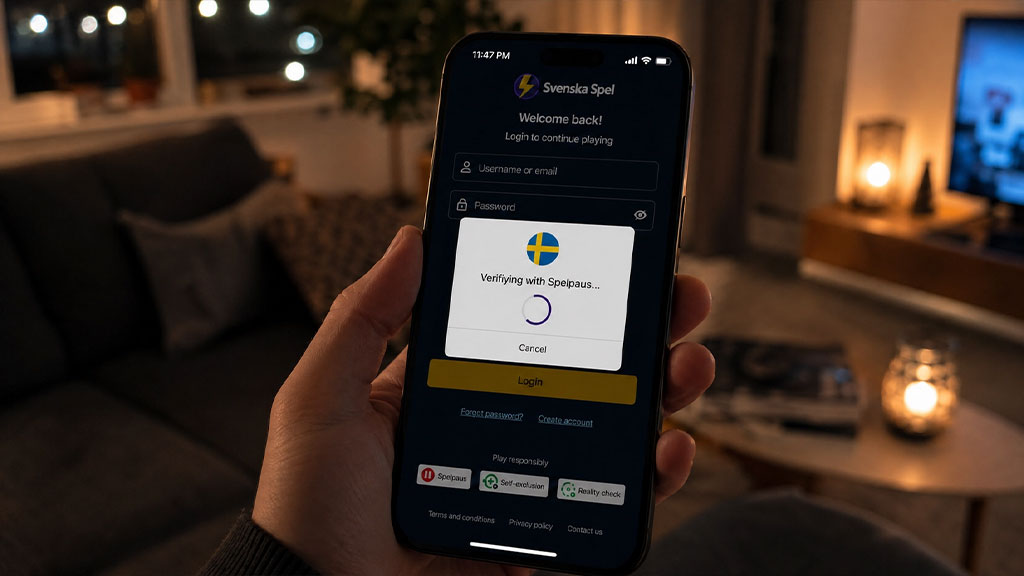
Sweden spelpaus verification rules are about to get considerably stricter. Spelinspektionen, the country’s gambling authority, confirmed that licensed operators must implement real-time Spelpaus database checks on every login attempt and deposit transaction starting August 1, 2026 — a significant upgrade from the current system, which permits batch verification at less frequent intervals and has allowed self-excluded players to slip through gaps during peak traffic periods.
The regulatory tightening is part of a broader 2026 reform package that has already delivered a credit card gambling ban in April and increased supervision fees for licensed operators. Together, these measures are transforming Sweden from one of Europe’s more permissive regulated iGaming markets into one of its most interventionist.
What the Sweden Spelpaus Verification Rules Actually Require
Under the current framework, operators must check whether a player is registered on Spelpaus — Sweden’s national self-exclusion register — before allowing them to gamble. In practice, many operators perform this check only at account creation and then rely on periodic batch queries, sometimes running as infrequently as once every 24 hours. That window creates a gap: a player who self-excludes at 9 a.m. might still be able to log into their account and place wagers until the operator’s next batch update pulls the updated exclusion list.
The August 2026 rules close that gap entirely. Every login attempt, every deposit request, and every session continuation beyond 60 minutes must trigger a real-time API call to the Spelpaus database. If the player is flagged as excluded, the system must deny access immediately — no grace period, no pending queue, no manual review.
Operators that fail to implement compliant real-time verification face sanctions ranging from warning notices to license suspension. Spelinspektionen has indicated that it will conduct unannounced technical audits during Q3 and Q4 2026 to test operator compliance, including simulated self-exclusion registrations followed by attempted logins on licensed platforms.
Technical and Cost Implications for Operators
The real-time requirement presents genuine engineering challenges. Operators running legacy platform architectures will need to refactor their authentication and payment pipelines to insert synchronous API calls at multiple checkpoints. Latency is the primary concern — adding a network round-trip to every login and deposit can degrade user experience if the sweden spelpaus verification rules integration is poorly optimized.
B2B platform providers including Kambi, Evolution, and SoftSwiss have already begun offering pre-built Spelpaus API modules to their operator clients, which should reduce implementation timelines for platforms that rely on third-party infrastructure. Operators running fully proprietary tech stacks face a larger development burden.
Cost estimates from two mid-tier Swedish licensees, speaking on background, suggest the integration work will run between SEK 2 million and SEK 5 million per operator depending on platform complexity — a manageable expense for large operators like Kindred or LeoVegas but potentially significant for smaller licensees already absorbing higher supervision fees.
Why Sweden Spelpaus Verification Rules Matter Beyond Scandinavia
Sweden’s approach to self-exclusion enforcement is being watched across Europe. The United Kingdom operates its own multi-operator self-exclusion scheme, GAMSTOP, but enforcement relies heavily on operator self-reporting rather than regulator-mandated real-time technical standards. Denmark’s ROFUS system uses a similar model to Spelpaus but has not yet mandated the same real-time verification cadence that Sweden is introducing.
If Sweden’s tighter rules demonstrably reduce the number of excluded players who continue gambling on licensed platforms, other European regulators will face pressure to adopt comparable standards. The Dutch KSA, which is currently focused on unlicensed operator enforcement, has separately flagged self-exclusion integrity as a priority for its 2027 regulatory agenda.
The sweden spelpaus verification rules also carry implications for the ongoing debate about channelization rates. Critics of Sweden’s regulated market have long argued that restrictive rules — particularly the single-welcome-bonus limitation and deposit limit mandates — push players toward unlicensed offshore operators that offer fewer restrictions and no self-exclusion checks at all. Spelinspektionen’s counter-argument is that a regulated market loses credibility if it cannot reliably protect vulnerable players who have taken the step of self-excluding.
Player Protection Across Regulated Markets
For players in markets where self-exclusion infrastructure is less developed, choosing operators with strong responsible gambling tools becomes a personal responsibility. Review platforms such as BSN’s Singapore casino guide evaluate operators partly on the strength of their player protection features, including deposit limits, session time controls, and self-exclusion options.
The August deadline gives Swedish operators roughly three months to complete their technical integrations. Spelinspektionen has offered a consultation window for operators with questions about API specifications and testing protocols, but there will be no extension of the compliance date. Operators that are not ready by August 1 will face enforcement action regardless of the reason for non-compliance.
Sweden’s message is clear: self-exclusion is only as effective as the technology enforcing it, and the sweden spelpaus verification rules update is designed to eliminate the technical loopholes that have undermined player protection since the regulated market launched in 2019. Whether the reform achieves its intended effect without further eroding channelization rates will be one of the most closely monitored regulatory experiments in European iGaming this year.




Why Is My Crypto Withdrawal Taking So Long? (Confirmations, Network, Fees)

USDT vs Bitcoin Casino Withdrawals: Speed, Fees & Risks Compared

Crypto vs E-Wallet Casino Withdrawals: Speed, Fees, Risks Compared

Responsible Gambling Controls in Regulated Markets (UK/AU) and How They Work

Name Mismatch: Why Wallet/Bank Names Must Match Casino Profiles

Best Casino Withdrawal Methods (Speed, Fees, Safety Compared)

AML in iGaming: Common Red Flags That Trigger Reviews

8 Nhà Cái Uy Tín Nhất Hiện Nay Tại Việt Nam Với Ưu Đãi Tặng Tiền Và Tỷ Lệ Cược Hấp Dẫn

How Online Gambling Payments Work Online
