
Online Slots Explained: How They Work and Risks


Online slots are one of the most common forms of digital gambling. They are easy to find, simple to start, and built around bright themes, moving symbols, and short rounds. That simple surface can hide a more complex system underneath.
This guide explains online slots. It covers how these games work, what terms like RTP and volatility mean, and why fairness claims need to be read carefully. It also looks at slot types, demo play, common myths, and safety issues.
This guide explains how the system works so the terms, risks, and limits are easier to understand. That matters because slot design can make outcomes feel more predictable or meaningful than they really are. In practice, each spin is usually a separate event controlled by code, not by memory, mood, or timing.
For editorial clarity, this article uses “online slots” as a broad term for digital reel-based casino games. Some operators and regulators use related labels such as “games of chance,” “remote games,” or “slot games.”
What Are Online Slots and How Do They Work?
Online slots are digital versions of slot-style gambling games. They usually show reels, symbols, and a paytable that explains which symbol combinations can return a payout. Instead of pulling a physical lever, the player presses or taps a spin button. The result appears in a few seconds, often with sound and animation to make the round feel active and dramatic.
At the most basic level, an online slot is a game of chance. The player stakes money, starts a spin, and the system determines an outcome. That outcome may return nothing, part of the stake, or a larger amount, depending on the game rules and symbol result. Some games also include extra features such as free spins, bonus rounds, expanding wilds, or multipliers, each of which follows its own slot feature rules and mechanics.
Online slots are different from older land-based machines in a few important ways. A digital game does not need physical reels or coins. It can include many more themes, more layers of design, and more flexible rule systems. It can also be updated more easily, offered in demo form, and accessed through mobile devices as well as desktop browsers.
That does not mean every game works in exactly the same way. Different titles can vary in layout, feature depth, hit frequency, volatility, and maximum win limits. Some are built to feel simple and familiar. Others are built to feel busy and eventful. The basic structure may look similar from one title to another, but the math model can be very different.
Key Parts of an Online Slot Game Explained
Most online slots are built from a few core parts. The first are the reels. These are the vertical columns that display symbols. A simple game may have three reels. A more modern video slot may have five or six, and some formats change reel size from one spin to the next.
The second part is the symbols. Standard symbols usually make up normal winning combinations. Special symbols can change how a round works. Wilds may substitute for other symbols. Scatters may trigger free spins or bonus rounds. Bonus symbols may unlock a separate feature game.
The third part is the paytable. This explains which symbol combinations count as wins, how much they pay, and what feature symbols do. It also shows the game’s stake range and often includes information about RTP or bonus rules. In simple terms, the paytable is the rulebook for that specific game.
Another key part is the way wins are formed. Some games use paylines, where symbols must land on specific lines across the reels. Others use ways systems, cluster pays, or other formats. The graphics can differ, but the important point is simple: the game rules decide what counts as a winning result.
How Online Slots Work Behind the Scenes
Behind the screen, an online slot is software. That wider software-driven model is easier to place in context when readers learn how online gambling works more generally. When a player starts a spin, the system uses programmed rules to generate the outcome. The flashing reels are the visual display of that outcome, not the real decision point. In other words, the reels are the presentation layer. The result is generally determined by the game logic before the animation finishes.
In many regulated markets, slot games rely on a random number generator, often shortened to RNG. An RNG is a system that produces values used to select outcomes. In plain language, it helps make sure the result is not chosen by a person pressing a hidden button somewhere. It is meant to keep each round independent within the rules of the game.
This matters because slot play can create strong patterns in the mind. A run of losses may make it feel like a win is “due.” A near-miss may make it feel like the game is reacting to recent spins. But the design of a random game does not usually work that way. In a standard slot model, one spin does not build a debt that the next spin must repay.
That does not mean all games are identical. A slot’s rules can include many variables: reel weights, feature frequency, symbol distribution, bonus triggers, and payout limits. These details shape the personality of the game. One title may pay small wins more often. Another may stay quiet for long periods and then produce a large feature round.
What RNG Means in Online Slots
RNG can sound technical, but the basic idea is simple. The system keeps generating values. When the player starts a spin, the game takes a value and maps it to an outcome. That mapping decides which reel positions appear and whether the result is a win, a feature trigger, or a loss.
The important point is that the player cannot reliably predict the next result from the last one. A spin that loses does not improve the chance that the next spin will win. A spin that wins does not make the next one less likely to pay. Each spin is normally a separate event, even when the session feels like a story.
In regulated environments, testing bodies may check whether the RNG and game logic behave within the approved rules, as reflected in games test report requirements for remote gambling software. That does not remove risk. It means the game is expected to perform according to its stated design rather than being secretly changed from one spin to the next.
How Slot Design and Math Models Shape Play
Slot outcomes are random within a structure, not random in a vacuum. A developer chooses that structure. It includes symbol weighting, bonus frequency, hit rate, volatility profile, and the overall return model.
For example, one game may have many small base-game wins but a modest top prize. Another may have fewer wins overall but a much larger ceiling when the bonus feature lands. Both are random, but they do not feel the same. This is why players often describe some slots as “calm” and others as “swingy.”
The design layer also affects how a result feels. Sound effects, near-miss animations, celebratory graphics, and feature teasers can make ordinary events feel more important than they are in financial terms. A return of less than the stake may still be shown with bright effects. That can make a net loss feel emotionally closer to a win.
What RTP Means in Online Slots
RTP stands for return to player. It is usually shown as a percentage, such as 96%. In simple terms, RTP is a theoretical long-run figure built into the game model, which is central to how RTP works in online slot games. It describes the share of wagered money that the game is designed to return over a very large number of spins.
That figure can be useful, but it is often misunderstood. RTP is not a promise about one session, one player, or one day. A game with 96% RTP does not mean a player who stakes 100 will get back 96 in the next hour. It means that, over a very large sample, the game is designed to return around that proportion.
The gap between theory and lived experience is important. A real session can sit far above or far below the published RTP, especially over a short run. RTP is a long-run math setting, not a short-run guarantee.
It is also worth noting that RTP alone does not describe the whole risk profile of a game. Two titles can display similar RTP figures but feel very different because their volatility, hit frequency, or bonus structure is different.
Slot Volatility and Variance Explained
Volatility, sometimes called variance, describes how uneven a slot’s payouts may be over time. A lower-volatility game tends to spread returns more evenly, often with more regular but smaller wins. A higher-volatility game may produce longer dry spells and rely more heavily on less frequent but larger payouts.
This concept helps explain how volatility affects slot gameplay, especially when two games with similar RTP figures can feel so different. One may create many short bursts of activity and keep the balance moving in smaller steps. Another may stay quiet for long periods and then shift sharply when a feature lands.
Volatility can affect player perception in powerful ways. Long losing runs may trigger chasing behaviour. Sudden large wins may create an illusion that the game is now “open” or likely to pay again soon. In reality, volatility describes distribution, not a promise that the game is entering a hot phase.
Types of Online Slots
Online slots come in several broad types of online slots. The oldest style is the classic slot. These games often use three reels, fewer paylines, and simple symbols such as fruit, bars, or sevens. They are usually easier to read and may have fewer bonus layers than modern titles.
Video slots are now more common. These often use five reels, more detailed themes, and extra features such as free spins, bonus rounds, symbol modifiers, and story-like presentation. They can be based on fantasy, mythology, adventure, films, music, or abstract design.
Progressive jackpot slots add another layer. In these games, part of qualifying wagers may feed a shared jackpot pool. That pool grows until a winning condition is met. Some jackpots are linked across many players or many sites, which is why the top prize can become very large in systems that show how progressive jackpot slot machines operate.
Megaways-style slots are another common format. These use changing reel heights to create a variable number of winning ways from one spin to the next. The format is known for busy screens and fast movement, though the exact volatility depends on the title.
There are also branded slots, cluster-pay games, cascading-reel games, and hybrid products that combine slot mechanics with mini-game features. The category is broad, but the core principle is usually the same: stake, spin, and let the software determine an outcome.
Common Slot Features
Special features are one reason modern slots can feel more complex than older machines. Free spins are one of the most common. A certain symbol pattern may trigger a set number of spins at no extra stake. During those spins, the game may add multipliers, extra wilds, or other changes.
Wild symbols usually substitute for other symbols to help complete wins. Some wilds are static. Others expand, stick in place, or move across reels. Scatter symbols often pay or trigger features regardless of exact payline position. Bonus symbols may open a separate round.
Multipliers increase the value of a win by a set amount. Cascading or tumbling reels are another common feature. Instead of spinning from scratch after every win, winning symbols disappear and new ones fall into place, sometimes allowing several wins in one paid round.
These features can make a game more entertaining to watch, but they can also make the payout structure harder to understand at a glance. A dramatic-looking bonus does not automatically mean the overall return is strong.
Free Slots vs Real-Money Slots
Many slot titles are available in demo mode as well as real-money mode. In demo mode, the player uses virtual credits and no real stake is placed. This can be useful for learning the layout, reading the paytable, and seeing how bonus features work in practice.
The key difference is obvious but important: demo play removes financial risk from the round itself. That changes the emotional experience. The same pattern in real-money mode can trigger stress, urgency, or chasing behaviour.
There is also a common debate about whether demo versions and real-money versions behave the same way. In regulated settings, the expectation is that the approved game rules apply consistently. But even when the underlying model is the same, a short demo session can still create a misleading impression.
From an educational view, demo play can help explain mechanics. It should not be treated as proof of future real-money results.
How to Read an Online Slot Paytable
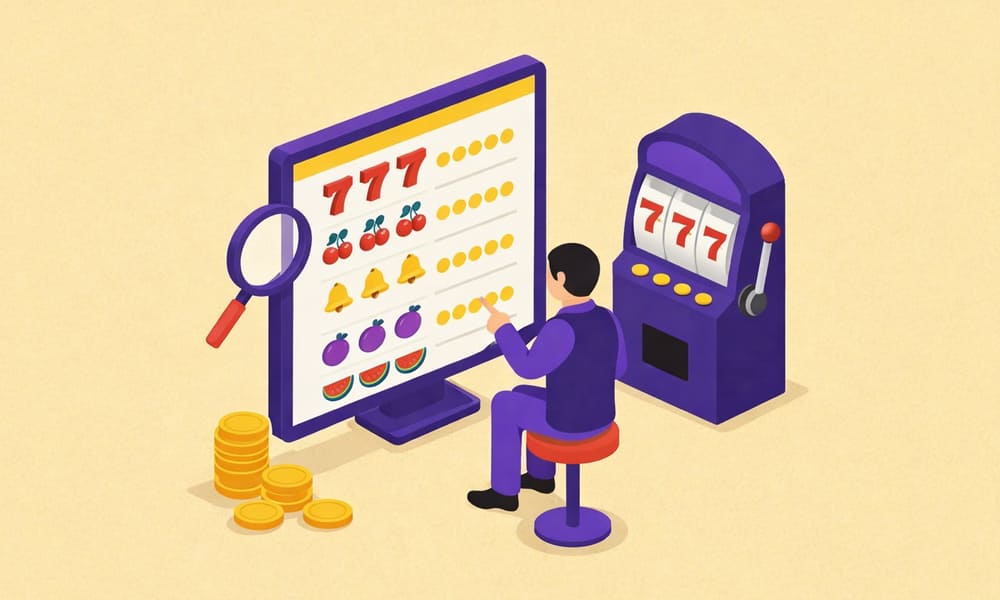
A paytable is one of the most useful parts of a slot, yet many players ignore it. It shows what each symbol can pay, how winning combinations form, what counts as a special symbol, and how feature rounds are triggered. In some cases it also includes maximum payout limits and whether wins pay left to right, both ways, or by another method.
Reading the paytable can help answer basic questions that the animation itself does not explain. How many scatter symbols trigger free spins? Does the wild appear on every reel? Can several bonus features combine in one spin? Is there a cap on the largest possible return?
A paytable also reminds readers that a slot is a rule-bound system. The symbols, features, and payouts are defined in advance.
What Online Slots Mean for Players in Practice
In practice, online slots are fast games with repeated cycles of stake and result. This speed matters. Short round times can make it easy to lose track of session length, especially on mobile devices. Autoplay, rapid spin features, and strong audio-visual feedback can reduce the feeling of pause between outcomes.
Another practical point is that a “win” on screen may not be a net gain. If a player stakes 1.00 and the game returns 0.40, the game may still animate the result with sound and colour. Financially, the balance has still fallen by 0.60. This is one reason slot play can feel more rewarding than the numbers alone suggest.
Bonus rounds also shape perception. Because they are framed as special events, players may give them more weight in memory than ordinary losing spins. A session with one lively bonus and many steady losses can still feel eventful even when the total result says otherwise.
Are Online Slots Fair and Truly Random?
“Fair” can mean different things. In a regulatory sense, fairness usually means the game behaves according to approved rules, does not secretly alter results outside those rules, and presents outcomes through tested software processes. In an everyday sense, people may use “fair” to mean satisfying or easy to beat. Those are very different ideas.
A regulated slot can still be hard to win on. That is because the operator edge is built into the long-run model. Testing or licensing does not remove that edge. It does not make the game favourable to the player in the long term. It means the game is expected to operate as declared rather than in a hidden or manipulated way.
This is why fairness claims should be read carefully. A fair random game is still a gambling product built to generate revenue. Testing can reduce certain forms of risk, such as hidden tampering or false presentation of rules. It cannot remove mathematical disadvantage, session volatility, or the behavioural risks linked to repeated play.
How Slot Licensing, Testing, and Oversight Work
In many markets, online gambling products are tied to licensing systems, technical standards, or approval processes. The exact rules vary by jurisdiction. Some countries license a broad private market. Others keep a much narrower model or restrict remote gambling more heavily.
Where testing is required, approved testing bodies may examine the game’s software, RNG behaviour, and compliance with technical rules. This does not guarantee a positive player experience. It does provide a layer of external review beyond the operator’s own claims. The UK Gambling Commission, for example, requires remote gambling licensees to submit game test reports and RNG test results as part of compliance.
The legal setting matters because it affects more than formal permission. It can shape advertising rules, age restrictions, payment controls, dispute handling, and the responsible gambling tools an operator must provide.
Online Slot Laws and Regulation
There is no single global rulebook for online slots. Gambling laws vary widely by country, and the same product can be treated very differently across borders. Some jurisdictions allow licensed remote gambling under defined conditions. Others restrict it heavily, block access, or treat most forms of online gambling as unlawful.
Because of that, any neutral guide should avoid assuming that readers in different countries have lawful access to the same slot products. It is more accurate to say that legality depends on the jurisdiction, the operator’s status, and the exact form of gambling service involved.
Asia shows how varied these rules can be. In Singapore, gambling is generally prohibited unless licensed or exempted, and official guidance states that Singapore Pools is the only operator licensed by the Gambling Regulatory Authority to provide remote gambling services. Enforcement also includes blocking against unlawful remote gambling services. In Malaysia, the legal picture is more fragmented. Older statutes such as the Common Gaming Houses Act 1953 and the Betting Act 1953 still matter, but they do not create one simple rule for every remote gambling scenario, and enforcement can also involve website blocking.
For that reason, broad claims about where online slots are “legal” or “safe” should be treated with care. A product that is licensed in one market may still be restricted, blocked, or unlawful in another.
Common Myths About Online Slots
One common myth is that a machine is “due” after a long losing run. In standard random slot design, that is not how the game works. A run of losses can happen without creating a debt the next spin must repay.
Another myth is that a slot becomes “cold” or “hot” in a way players can read from a few rounds. Sessions can certainly feel that way, but short runs are poor evidence of a lasting state. Random sequences often produce clusters that look meaningful to the human brain.
A third myth is that there is a secret time of day when slots pay better. Unless a game is unlawfully manipulated, the idea that ordinary players can improve outcomes by choosing a lucky hour has no solid basis.
Near misses are another source of confusion. When two bonus symbols land and the third appears just above the reel window, it can feel as though the feature almost happened. Mathematically, the near miss is simply another non-triggering result within the game design.
How Online Slot Design Can Affect Behaviour
Modern slot design does not just present outcomes. It also shapes attention, emotion, and pace. Fast rounds, bright feedback, and intermittent rewards can encourage players to continue even after a series of net losses. Slots are especially efficient at compressing many decisions into a short period.
Losses disguised as wins are one example. A sub-stake return can be framed with sounds and visual celebration. Frequent small rewards can also create a rhythm that feels more positive than the overall balance change. Bonus anticipation and collection features can further strengthen the sense of progress.
This does not mean every design element is improper. It means the presentation layer matters. A stimulating session is not always a profitable one. A memorable bonus is not evidence that the overall system is generous.
Responsible Gambling Risks and Warning Signs
Because online slots are fast, repetitive, and chance-based, they can carry meaningful risk for some users. The main concern is not only the money staked. It is also the pattern of play: speed, repetition, emotional swings, and the temptation to continue after losses in order to recover them.
Common warning signs include spending longer than planned, chasing losses, hiding gambling activity, feeling irritable after stopping, or treating gambling as a way to solve money problems. When these signs appear, the issue is often no longer just entertainment. It becomes a harm question.
A responsible gambling frame starts with clear limits, honest tracking, and a willingness to stop when those limits are reached. It also depends on product-side tools such as deposit limits, time reminders, cooling-off periods, and self-exclusion systems where available. In Singapore, official responsible gambling resources describe harm-minimisation measures, exclusion systems, and support services for people affected by gambling problems.
How This Guide Reviews Online Slots Neutrally
When editorial teams explain slot products in a neutral way, the focus should stay on mechanics, risk, transparency, and context. Useful questions include: What does the paytable reveal? Is RTP stated clearly? Does the game explain its features well? Are maximum win limits shown? Is the volatility described or only implied? Are loss-heavy sessions made to feel more positive than they are?
This kind of review method is different from promotional content. It does not rank games by hype, bonus claims, or emotional appeal. It treats the slot as a designed system that can be described, compared, and questioned.
Conclusion
Online slots may look simple, but they combine software logic, payout math, design psychology, and legal context. The spin button is only the visible part of the system. Underneath it sit rules about RTP, volatility, feature triggers, and symbol behaviour, all presented through graphics built to hold attention.
That does not mean every slot is deceptive in the same way, or that every player will experience harm. It does mean that slot play should be understood as a structured gambling product, not as a puzzle that skill, timing, or instinct can reliably solve. A fair random game can still be expensive, fast, and emotionally misleading over short sessions.
For readers trying to make sense of online slots, the most useful starting point is not a promise of wins. It is a clear view of how the system works, what the published figures actually mean, and where the practical and legal limits begin.
Online Slots FAQs and Key Questions Answered
What is an online slot?
Are online slots random?
What does RTP mean in slots?
What is volatility in a slot game?
Are demo slots the same as real-money slots?
Can players tell when a slot is about to pay?
Does licensing make a slot safe?








Why Is My Crypto Withdrawal Taking So Long? (Confirmations, Network, Fees)

USDT vs Bitcoin Casino Withdrawals: Speed, Fees & Risks Compared

Crypto vs E-Wallet Casino Withdrawals: Speed, Fees, Risks Compared

Responsible Gambling Controls in Regulated Markets (UK/AU) and How They Work

Name Mismatch: Why Wallet/Bank Names Must Match Casino Profiles

Best Casino Withdrawal Methods (Speed, Fees, Safety Compared)

AML in iGaming: Common Red Flags That Trigger Reviews

8 Nhà Cái Uy Tín Nhất Hiện Nay Tại Việt Nam Với Ưu Đãi Tặng Tiền Và Tỷ Lệ Cược Hấp Dẫn

How Online Gambling Payments Work Online
