
Gambling
European Regulators Unite Against Offshore Gambling as UK Prepares New Affordability Checks


By Daniel Cheng, Asia Markets Reporter
The European regulators coalition targeting offshore gambling sites now spans seven authorities — the UK Gambling Commission, Italy’s ADM, Germany’s GGL, the Netherlands’ KSA, France’s ANJ, Spain’s DGOJ, and Portugal’s SRIJ — and its implications reach well beyond Europe. For Tier 1 and Tier 2 Asian markets whose players routinely visit offshore brands, the European regulators coalition’s data-sharing framework sets a precedent that regulators in Singapore, the Philippines, and Japan are already studying.
How the European Regulators Coalition Actually Operates
The memorandum of understanding, finalized in late 2025 and ramping up enforcement through Q1 and Q2 of 2026, commits the signatories to share intelligence on payment processors, affiliate networks, software suppliers and domain registrars that facilitate access to unlicensed operators. Crucially, it also commits regulators to coordinated action — so if a payment processor gets flagged in Germany, the KSA and ADM can act simultaneously instead of waiting for a Dutch or Italian investigation to build a parallel case from scratch.
The practical effect is faster shutdowns and higher enforcement costs for offshore brands. A site operating from Curaçao and accepting players in six coalition countries previously had to lose access in all six before losing meaningful revenue. Under the European regulators coalition framework, coordinated payment-processor pressure can sever a brand’s EU revenue in weeks rather than quarters.
UK Affordability Checks: The Next Shoe
The UK Gambling Commission is widely expected to publish its next round of affordability-check guidance later in 2026. The current regime uses “frictionless” financial risk assessments at defined monetary thresholds, and operators have been running a beta pilot through 2025. The UKGC’s next move is expected to tighten the threshold and require clearer audit trails from operators showing how they identified and intervened with at-risk players.
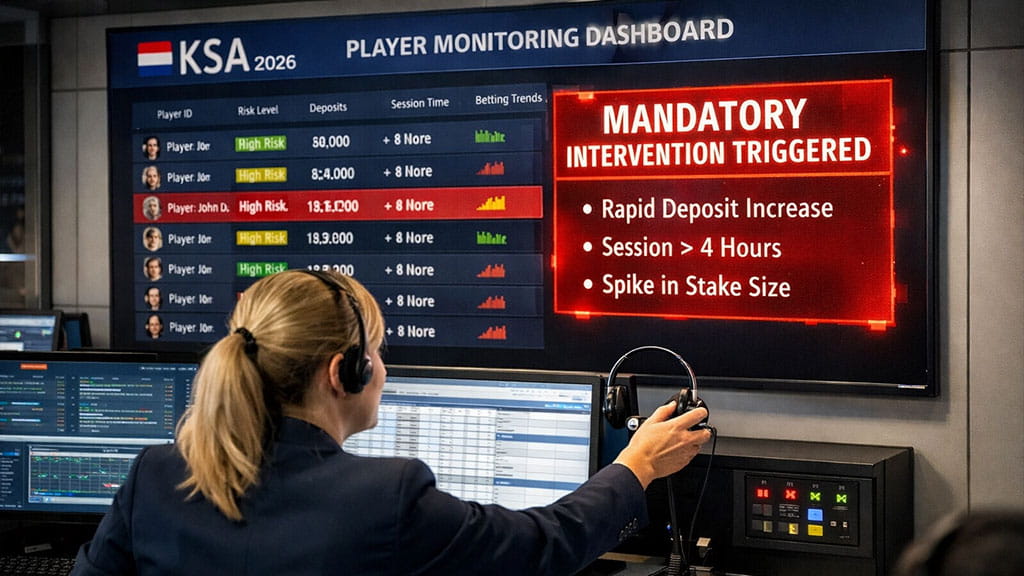
Coalition signatories are watching the UK closely because the UKGC has historically led European regulators in detailed behavioral rules. What the UK codifies in affordability is likely to appear in German deposit-limit enforcement and Dutch Cruks self-exclusion cross-checks within 18 months. The European regulators coalition will carry those rules from one jurisdiction to the next with minimal lag.
Why This Matters for Tier 2 Markets
Brazil’s newly regulated iGaming market, which went live with licensed operators in January 2025, is explicitly modeling its enforcement infrastructure on the European approach. Brazilian regulators have already signed intelligence-sharing agreements with both the UKGC and ADM, and the European regulators coalition framework gives Brazil a template for multi-regulator coordination as its market matures. Colombia’s Coljuegos has also been in informal talks with ANJ and DGOJ on payment-processor enforcement.
In Asia, Singapore’s Gambling Regulatory Authority and Japan’s integrated-resort oversight body are studying the European data-sharing MOU structure for potential adaptation. For players comparing regulated versus offshore brands — a decision point covered in Thailand online casino reviews where regulatory context matters as much as bonus offers — the coalition’s trajectory signals that the offshore-versus-regulated gap will widen globally, not just in Europe.
Operator Implications
Licensed operators in coalition countries benefit structurally. Entain, Flutter, Evoke, LeoVegas and Kindred have all cited enforcement coordination in investor commentary as a tailwind for 2026 and 2027. The argument is straightforward: every offshore brand pushed out of the German or Dutch or Italian market is a cohort of players funneled toward licensed operators, and the operators best positioned to absorb that demand are the ones already spending on brand and compliance.
Offshore brands face a harder problem. The European regulators coalition framework makes pan-European operation materially more expensive, and some operators will rationally conclude that serving coalition jurisdictions from a Curaçao or Anjouan license is no longer economic. Expect a quiet exit of mid-tier offshore brands from coalition markets through Q3 2026, followed by the larger brands either applying for local licenses or accepting geofencing as the new baseline.
Enforcement Mechanics to Watch
The coalition’s first coordinated enforcement wave is expected to target affiliate networks — the marketing rails that drive offshore traffic. Affiliates are typically harder to geofence than operators because they operate from lighter regulatory jurisdictions and have less at stake than an operator’s license. The European regulators coalition’s intelligence-sharing structure gives regulators the ability to map affiliate networks across borders, identify the top-of-funnel distributors, and apply coordinated pressure on domain registrars and hosting providers.
A secondary wave will target software suppliers. European regulators have historically avoided going after slot studios directly, preferring to pressure operators. The coalition framework opens the door to supplier-level action — if a studio’s games are distributed through unlicensed operators in coalition markets, the studio itself could face license or certification consequences in other coalition markets where it is compliant.
What It Means for 2026
The European regulators coalition is the most significant cross-border gambling enforcement development of the decade. It does not create new law, but it compresses the enforcement timeline from quarters to weeks and creates a template for other regulatory blocs to copy. The question for 2026 is how quickly Brazil, Colombia, and a loose grouping of Asian regulators formalize their own frameworks.
For operators, the strategic answer is to accelerate local-licensing investment everywhere the numbers justify it and to stop betting on regulatory stasis in any Tier 1 or Tier 2 market. For players, the practical answer is that the gap between the regulated and offshore experience will keep widening — licensed operators will spend more on affordability tooling, self-exclusion cross-checks, and dispute resolution, while offshore brands will increasingly feel the pinch of payment-rail and affiliate enforcement.
The coalition’s real test comes in the second half of 2026, when the first fully coordinated enforcement wave lands and the data either supports the UKGC-led model or reveals gaps that Brazilian and Asian regulators will want to avoid replicating. Until then, every offshore brand with European exposure is operating on a shortening runway — and every licensed operator in coalition markets is quietly betting that runway runs out in their favor.








How Online Gambling Payments Work Online

Free Credit No Deposit Casino Malaysia 2026: How to Claim RM20+ Bonuses at Trusted Online Casino Sites

Free Credit No Deposit Casino Malaysia 2026: How to Claim RM20+ Bonuses at Top Sites

Esports Betting Guide: How It Works and Risks

Best E-Wallet Casinos in Malaysia (April 2026): Complete Guide to TNG, GrabPay, and Secure Deposits

Best E-Wallet Casinos in Malaysia (2026 Guide)

Top 7 Best Casino Welcome Bonuses in Malaysia (2026)

How Online Sports Betting Really Works

Best E-Wallet Casinos in Malaysia: Top 7 Picks (2026)
