
News
Italy ADM Reshapes iGaming Market With 52 New Licenses — Skin Model Killed, €7M Fee Per Operator

By Daniel Cheng, Asia Markets Reporter
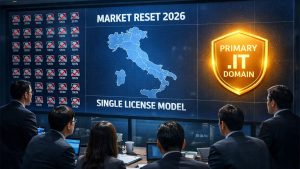
Italy’s online gambling market got rebuilt from the license layer up on April 1, 2026, and the reshuffle is already sending tremors into Asian operator strategy rooms. The Agenzia delle Dogane e dei Monopoli issued 52 new nine-year concessions — 46 of which went live immediately — while abolishing the “skins” model that had allowed multiple branded sites to operate under a single master license. Each holder now gets exactly one official domain, and hundreds of affiliate and skin sites went dark overnight. The €7 million per license fee is the largest structural market reset any European regulator has executed this decade, and it changes the commercial calculus for every operator — including Asia-based suppliers and B2B firms that had staked Italy exposure through skin partnerships.
How Italy’s Market Actually Changed
Before April 1, Italian online gambling ran on roughly 90 concession holders, many of whom operated dozens of branded sites apiece under the skin framework. The ADM’s 2023 reform decree — finally implemented in 2026 after two delays — ended that architecture. Each new concession holder now operates a single “.it” domain. Skin sites were told to migrate players or shut down, and most chose the latter.
The commercial implications are blunt. Affiliate partnerships that relied on skin-site traffic collapsed overnight. Player databases had to be re-consented under Italian data protection law before migration to a primary domain. Ongoing promotional campaigns tied to multiple skins had to be wound down. The ADM granted a 30-day grace period for operator marketing catalogues to be refiled, which ends in early May; compliance teams are working in near-panic mode.
Who Got the 52 Licenses
The concession holders span the expected Italian heavyweights — Lottomatica, Sisal, SNAI, Eurobet — and include several multinational operators: Flutter via Sisal and PokerStars, Entain via partypoker.it, Bet365 through a standalone Italian entity, and Playtech-linked brands. Notably, several Asia-headquartered B2B platform providers got no direct concession and must now work through Italian-licensed partners on revised commercial terms, which has already pushed at least two SE Asian platform vendors into urgent partnership renegotiation.
The €7 million upfront fee per license and the nine-year term create a long commitment horizon. That deters speculative entries but rewards operators with serious balance sheets. The market is consolidating by design, and the ADM has been open about that goal — Director-General Roberto Alesse has said publicly that the reform is intended to produce a smaller, better-capitalized, more accountable licensed sector.
SPID and Identity Verification
The other major change is the mandatory use of Italy’s SPID digital identity system for new player registration on concession holder sites. SPID is the same identity framework Italians use for tax filings and public services. Integrating it into an online gambling onboarding flow removes a significant fraud vector and aligns identity verification with national digital ID policy. It also makes cross-border player acquisition much harder, which is probably also the point.
What It Means for Asian Suppliers
Italian iGaming has been a lucrative market for Asia-based content aggregators and platform vendors, notably Philippines-licensed B2B firms and Malta-Asia hybrid suppliers. The skin model was how many of those vendors maintained exposure — white-labeling their offering to Italian concession holders and earning revenue share across multiple branded sites. That model is effectively dead in its Italian form. Vendors now have to negotiate directly with each of the 46 live concession holders, and the commercial terms are sharply less favorable than under the old framework.
Expect consolidation among platform providers as well. Smaller Asian suppliers without the balance sheet to fund certification, localization, and integration across multiple Italian concessions will quietly exit. Larger global suppliers — Evolution, Pragmatic Play, BTG, and NetEnt — are already well-positioned, and their Italian market share will grow.
The Regulatory Signal to the Rest of Europe
Italy’s reset gives the European Commission’s long-running internal debate over gambling harmonization a concrete template. ADM has demonstrated that a Tier 2 EU regulator can execute a massive structural change on a defined timeline, maintain tax receipts, and consolidate the licensed market without triggering an infringement proceeding. Expect Spain’s DGOJ and Portugal’s SRIJ to borrow elements of the Italian playbook, particularly the single-domain-per-license rule, within 18 months.
For operators reassessing jurisdictional strategy post-Italy, our comparative review of the best online casinos serving Singapore players looks at how Asian-regulated markets handle similar identity verification and licensing consolidation questions.
Short-Term Winners and Losers
Short-term winners: the 46 live concession holders who now face less fragmented competition, Evolution and Pragmatic Play on the supplier side, and the Italian tax authority, which will see a cleaner reporting stream. Short-term losers: skin-site affiliate networks, Asia-based B2B vendors without direct concession access, and smaller Italian brands that were priced out of the €7 million fee.
Long-term, the real test is whether consolidation translates into better player outcomes. ADM is promising increased compliance monitoring, stronger responsible gambling oversight, and measurable reductions in black-market activity. Those are the metrics the regulator will be judged on when the European Commission reviews the Italian reform in 2028.
Operators and analysts tracking the technical detail of the reset will find the concession decree and annexes on the ADM gambling policy portal, which is the authoritative source for the full license framework and ongoing compliance updates.
Italy just forced the entire European iGaming supply chain to rethink how it accesses one of the continent’s biggest regulated markets. The shockwaves will not stop at the Italian border.


How Online Gambling Payments Work Online

Free Credit No Deposit Casino Malaysia 2026: How to Claim RM20+ Bonuses at Trusted Online Casino Sites

Free Credit No Deposit Casino Malaysia 2026: How to Claim RM20+ Bonuses at Top Sites

Esports Betting Guide: How It Works and Risks

Best E-Wallet Casinos in Malaysia (April 2026): Complete Guide to TNG, GrabPay, and Secure Deposits

Best E-Wallet Casinos in Malaysia (2026 Guide)

Top 7 Best Casino Welcome Bonuses in Malaysia (2026)

How Online Sports Betting Really Works

Best E-Wallet Casinos in Malaysia: Top 7 Picks (2026)
