
Casino Deposit and Withdrawal Fees Compared

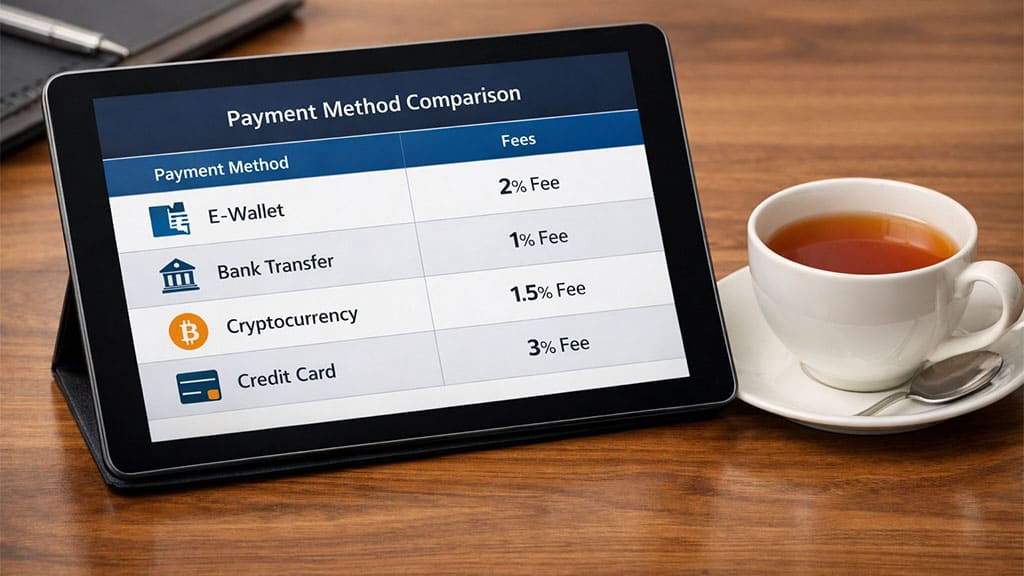
In today’s online casino world, players have a wide variety of payment methods to choose from. Different payment methods can lead to different costs, processing times, and common payment issues. A central part of any casino payment comparison is the level of casino deposit fees, casino withdrawal fees, and other payment method fees attached to each transaction. These fees can vary depending on the payment provider, the casino, and the country where the player is located.
Bright Side of News reviewed public fee pages and payment-provider terms to explain how charges can differ by method, currency, and market. This guide covers bank transfers, credit and debit cards, e-wallets, and other payment options. By showing where charges appear and why they vary, the article gives a clearer comparison of total payment cost.
Method note: This article is based on publicly available fee pages, payment-provider terms, issuer guidance, and regulatory material available at the time of review. Casino-side charges, payout availability, and payment timing can still differ by operator, account checks, country, and currency.
Payment availability and fee treatment can also change by jurisdiction. In some markets, card use, wallet funding routes, payout methods, or gambling-related payment processing may be restricted or handled differently under local rules.
Why Casino Payment Fees Matter for Deposits and Cashouts
Payment fees in online gambling often include hidden fees and transaction fees that are easy to miss. Even when a single deposit charge looks small, repeated payments can raise the total cost over time, especially for frequent account funding.
Likewise, withdrawal fees directly impact the amount players actually take home from their winnings, potentially reducing overall earnings. Online casinos typically collaborate with a variety of financial partners, including traditional banks, e-wallet platforms, credit and debit card providers, and other specialized payment processors. Each of these options comes with its own distinct fee structure, processing times, and potential limitations, meaning that the choice of payment method can have a real effect on a player’s bottom line.
A closer review shows that even small fee differences can change the total cost of repeated deposits or withdrawals over time. For that reason, a clear fee comparison separates provider fees, casino-side charges, currency conversion costs, and timing limits. This keeps the section focused on how fees work, why charges appear, and how hidden costs can reduce the amount finally received.
A low-cost deposit method does not always remain the lowest-cost withdrawal method. Some payment rails are cheap when funding an account but become more expensive, slower, or more limited when money is paid back out. For that reason, deposit fees and withdrawal fees are best assessed separately before any payment method is described as lower cost overall.
How Online Casino Deposit and Withdrawal Fees Work
Payment fees in online casinos can be confusing. Some casinos charge players directly for using certain payment methods, while others pass the fees from the payment provider to the player. In addition, fees may vary depending on whether the transaction is a deposit or a withdrawal.
Main Types of Casino Deposit and Withdrawal Fees
- Deposit Fees: Deposit fees occur when a player adds money to their casino account. Some operators absorb them, while banks, card issuers, or wallets may still charge fees.
- Withdrawal Fees: Withdrawal fees are applied when players cash out their winnings. In many cases, payout costs vary more than deposit costs because the final route, currency, provider rules, and any receiving-bank deductions can change the amount received.
- Currency Conversion Fees: Players using payment methods in a currency different from the casino’s primary currency may face additional conversion charges.
- Processing Fees: These fees are charged for moving the payment through the chosen system. They may come from the wallet, bank, card issuer, exchange service, or payout rail, and they may appear as a flat charge, a percentage, or a less visible deduction during settlement.
Understanding these fees is essential when comparing payment methods. A payment method may look cheap at first because the visible deposit fee is low or zero. The final cost can still rise once foreign exchange spreads, payout-route charges, issuer treatment, intermediary deductions, or failed-transfer handling are added. For that reason, the lowest visible fee and the lowest total cost are not always the same thing. Players often underestimate how much these charges can affect their overall gambling budget, especially over multiple transactions.
Casino Payment Methods Compared by Total Cost
Players have a variety of options to deposit and withdraw money. Each has advantages and potential drawbacks, particularly regarding fees.
| Payment Method | Deposit Fee Risk | Withdrawal Fee Risk | Currency Conversion Risk | Speed Pattern | Common Hidden Costs |
| Bank Transfer | Low to medium | Low to medium | Medium | Varies by rail and country | Receiving-bank deductions, intermediary charges |
| Credit/Debit Card | Low to medium | Medium to high | Medium to high | Often simple for deposits; less consistent for payouts | Cash-like treatment, issuer charges, FX costs |
| E-Wallet | Low to medium | Medium | Medium to high | Often quick, but not uniform | Wallet withdrawal fees, FX spreads, payout-route charges |
| Prepaid Method | Medium | Medium to high | Medium | Simple for deposits; limited for payouts | Purchase fees, extra transfer steps, conversion costs |
| Cryptocurrency | Low to high | Low to high | Medium to high | Varies by network and confirmation time | Network congestion, exchange spreads, conversion charges |
E-Wallets
E-wallets have grown in popularity due to their speed and convenience. Services like PayPal, Skrill, and Neteller allow players to store funds online and pay without directly sharing bank details with the casino.
Fees Overview:
- Deposits: Fee levels vary by wallet and funding source.
- Withdrawals: Charges depend on the payout rail and market.
- Currency Conversion: Published wallet FX charges can be higher than simple 2–3% estimates, as shown on the official Skrill fees page and Neteller fees page.
E-wallets are often quick, but e-wallet fees, payment processing times, and payout fees still depend on the wallet, funding source, payout route, currency, and casino process, while safety questions are better understood through a separate comparison of e-wallet vs bank transfer withdrawal safety. Public fee pages show mixed results: some PayPal withdrawals to linked bank accounts are free where no conversion applies, while Skrill and Neteller list withdrawal and FX charges. For that reason, e-wallets should be described as variable-cost options, not as the default lowest-fee choice.
Bank Transfers
Bank transfers are a direct way to move money from a personal bank account to the casino. They are highly secure and trusted by major financial institutions.
Fees Overview:
- Deposits: Local bank transfer fees can be low, but they are not always zero.
- Withdrawals: Costs vary by bank, country, rail, and any intermediary involved.
- Currency Conversion: Exchange charges or receiving-bank deductions may still apply.
Bank transfers are established and widely used, but cost and timing depend on the payment rail, country, casino checks, and any cross-border routing. Some bank rails are instant or near real time, while others take longer. For larger amounts, flat-fee structures can sometimes work out better than percentage-based wallet charges, but that is not universal.
Credit and Debit Cards
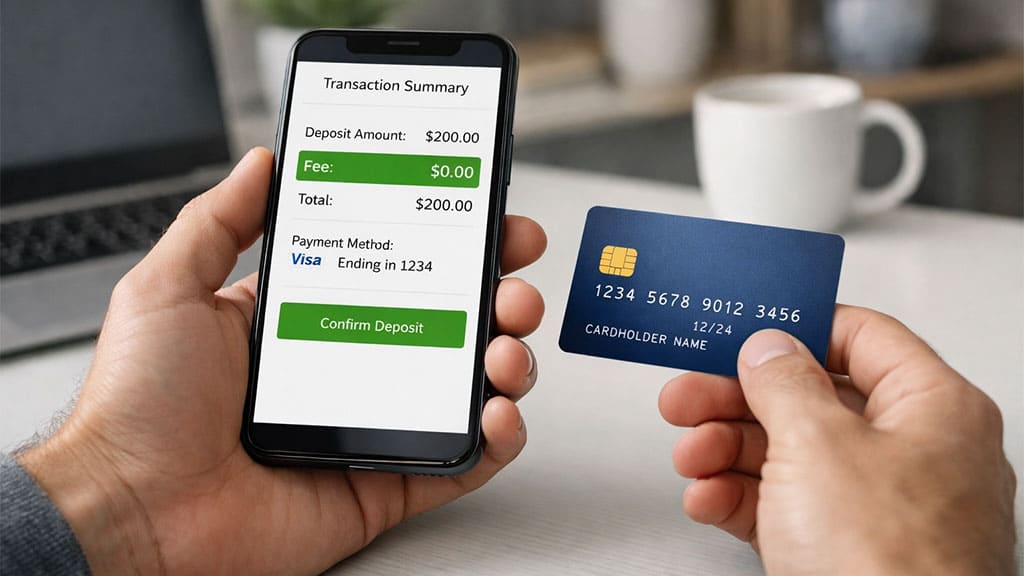
Credit and debit cards remain one of the most common methods for online casino payments. Visa and Mastercard dominate this space.
Fees Overview:
- Deposits: Card charges depend on issuer rules, merchant coding, region, and whether the transaction is treated as card cash advance or another cash-like payment type.
- Withdrawals: Availability and fees vary by operator and card rail.
- Currency Conversion: Issuers may apply foreign transaction, cash-like, or conversion fees.
Cards are convenient, but fees for withdrawals and international transactions can be significant. While deposits are generally free, players may face extra charges if the casino converts currencies or uses third-party processors. Withdrawal timing can vary from relatively quick to several business days, depending on the operator, card rail, issuer checks, and currency handling.
Prepaid Cards
Prepaid cards like Paysafecard allow players to load funds onto a card and deposit them at casinos without a bank account or credit card.
Fees Overview:
- Deposits: Upfront purchase, service, or conversion fees may apply.
- Withdrawals: Direct prepaid payouts are limited, but some systems now support account-based payout flows.
- Currency Conversion: Conversion charges may still apply.
Prepaid methods can help separate gambling spend from a main bank account, but they are often less flexible for payouts. That matters for fee analysis because an extra step after payout can add another charge, limit, delay, or conversion cost before funds reach a usable account.
Cryptocurrencies
Cryptocurrencies, such as Bitcoin and Ethereum, are sometimes used for casino payments, but their cost and speed depend heavily on the network, timing, and conversion path.
Fees Overview:
- Deposits: Crypto network fees can be low or high depending on congestion.
- Withdrawals: Network and exchange costs may both apply.
- Currency Conversion: Fiat conversion can add spread and service charges.
For users already holding digital assets, crypto can sometimes reduce banking friction, but it should not be described as almost instant or predictably cheap in every case. Funds are normally credited only after blockchain confirmation, and both fees and timing can change with network conditions. Price swings can also reduce the final value received.
What Affects Casino Deposit and Withdrawal Fees
Casino payment fees can change for several reasons, and the visible charge is not always the full cost. The main drivers usually include transaction size, currency, payment route, issuer rules, operator rules, and regional availability.
- Transaction Amount – The size of a deposit or withdrawal can change how heavy a fee feels in practice. A flat fee has a much bigger effect on a small payment than on a large one. For example, a fixed fee of 3 on a deposit of 20 removes a far larger share of the payment than the same fee on 200.
- Currency Differences – Currency conversion is a common source of extra cost. When the payment currency does not match the casino account currency, the total charge may include both a visible conversion fee and a weaker exchange rate.
- Bank and Issuer Policies – Banks and card issuers do not all treat gambling-related transactions in the same way. Some may add extra charges, apply cash-like treatment, or block the payment route entirely. Issuer treatment of gambling and cash-like transactions is a real factor in some markets.
- Casino Policies – Some operators absorb selected payment costs, while others pass more of the cost to the user. Fee treatment can also change by payment method, account level, withdrawal frequency, or market.
- Location – A player’s country or region can affect both availability and cost. Cross-border routing, regional restrictions, and local banking support can all change the final fee.
- Frequency and Timing of Transactions – Repeated small withdrawals may create more total charges than a less frequent payout pattern. Some operators also limit free withdrawals or apply charges after a certain number of payout requests.
Taken together, these factors show why the lowest-fee method in one case may not remain the lowest-fee method in another.
Payment Speed vs Fees in Casino Deposits and Cashouts
While fees matter, speed and access to funds also affect the real cost of a payment method. A slower but cheaper payout route may suit one situation, while a faster route with extra charges may suit another.
E-wallets and some crypto payments can be quick in some setups, but they may still carry wallet, network, exchange, or payout charges. Bank transfers may look cheaper on paper, yet delays, intermediary deductions, or cross-border handling can change the result. Card payments can feel simple at deposit stage, but withdrawal support and issuer treatment are less consistent.
For that reason, payment speed should be assessed alongside visible fees, hidden deductions, payout limits, and currency handling rather than on its own.
How Secure Casino Payment Methods Really Are
While fees are important, security remains a critical factor:
- Bank transfers generally rely on established banking systems and familiar account-verification controls.
- E-wallets often include privacy and account-security features such as encryption and two-factor authentication.
- Cryptocurrencies use blockchain-based transfer systems, but wallet security still depends heavily on the user’s own setup.
- Credit and debit cards often include fraud protections, although card-linked payment flows may still expose more personal banking details than some wallet-based methods.
In practice, fee analysis is stronger when security, speed, reversibility, and payout access are reviewed together rather than treated as separate issues.
Why Casino Payment Fees Go Up or Down by Method
Fee outcomes are often shaped by setup choices rather than by a single payment brand. Using the same currency can reduce conversion costs, while extra steps between deposit, payout, and final withdrawal can add more charges. Provider limits, minimum withdrawals, withdrawal limits, failed withdrawal fees, and payout restrictions can also change the net result. In this context, the issue is better explained as a payment-system pattern rather than as step-by-step advice.
How Payment Methods Affect Budgeting and Spending Control
Payment method design can also affect spending patterns and account behavior.
- Budgeting: Prepaid vouchers can support strict financial limits, as players are restricted to the amount available on the card.
- Speed and Impulse: Faster withdrawal routes can shorten the time between payout request and access to funds, while fast deposit routes may increase impulsive funding in some cases. In regulated settings, some operators provide account tools such as deposit limits to support spending control.
Conclusion: Which Casino Payment Method Costs Less Overall
No single payment method has the lowest fees in every casino-payment situation. Public fee schedules and issuer rules show that the final cost can change by provider, funding source, payout route, currency, market, and transaction size.
In some cases, a bank transfer may look cheapest. In others, a wallet, card route, prepaid account flow, or cryptocurrency payment may produce the lower total cost. The result depends not only on the visible fee, but also on exchange costs, payout limits, processing rules, and how the funds are finally received.
For that reason, the clearest way to compare casino payment methods is to look at total cost rather than headline fee alone.







Crypto vs E-Wallet Casino Withdrawals: Speed, Fees, Risks Compared

Responsible Gambling Controls in Regulated Markets (UK/AU) and How They Work

10 Best Online Casino Singapore Sites Ranked and Reviewed

Name Mismatch: Why Wallet/Bank Names Must Match Casino Profiles

Best Casino Withdrawal Methods (Speed, Fees, Safety Compared)

AML in iGaming: Common Red Flags That Trigger Reviews

8 Nhà Cái Uy Tín Nhất Hiện Nay Tại Việt Nam Với Ưu Đãi Tặng Tiền Và Tỷ Lệ Cược Hấp Dẫn

How Online Gambling Payments Work Online

Free Credit No Deposit Casino Malaysia 2026: How to Claim RM20+ Bonuses at Trusted Online Casino Sites
