
News
MGM Resorts and BetMGM Commit $450,000 to ICRG for Sports Wagering Research — Inside the Industry’s Biggest Responsible Gambling Bet of 2026

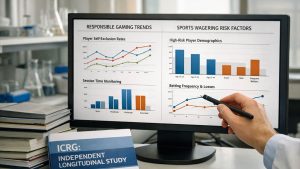
By Marcus Hall, Responsible Gambling Columnist
During Problem Gambling Awareness Month, MGM Resorts International and BetMGM have announced a combined $450,000 commitment to the International Center for Responsible Gaming (ICRG) to fund a new research initiative focused specifically on sports wagering and its impact on player behavior. The grant is part of a broader $1 million-plus package of responsible gaming initiatives the two companies have unveiled this year, and it lands at a moment when the scientific understanding of sports betting’s social cost has never been more contested.
For an industry that has spent the last five years expanding faster than its research base can keep up, this matters.
Why Sports Betting Research Has Lagged
Legal sports betting in the United States is, on a national scale, barely six years old. The Supreme Court’s 2018 PASPA ruling cleared the way for state-level legalization, and since then the sector has gone from a handful of markets to a country-wide phenomenon. Handle volumes, app downloads, and problem-gambling helpline calls have all grown in lockstep.
But meaningful peer-reviewed research takes time. Longitudinal studies of sports betting’s financial, psychological, and household impact are only now beginning to produce their first substantive findings. Recent work — including widely cited studies showing a 10% increase in personal bankruptcy and an 8% jump in debt collection amounts in states that legalized online sports betting — has begun to define the contours of the harm side of the ledger.
The MGM / BetMGM grant is explicitly designed to accelerate that research curve. Funded projects will focus on how sports wagering specifically differs from traditional casino gambling in terms of problem gambling risk factors, the role of in-play microbetting, the influence of responsible gaming messaging on bettor behavior, and the effectiveness of self-exclusion tools.
What $450,000 Actually Buys
For context, $450,000 is not a small research budget — but it is also not enormous. A typical ICRG-funded research project runs between $100,000 and $250,000 over 18 to 24 months. The MGM / BetMGM grant will likely seed two to three mid-sized studies, each producing peer-reviewed outputs with practical implications for operator design and regulator policy.
What makes this funding model notable is its independence. ICRG grant recipients conduct research under standard academic norms — peer review, open publication, independent methodology. Funders don’t get to shape conclusions. That structural independence matters because it shields the resulting research from the “industry-funded, industry-friendly” critique that has historically dogged gambling studies.
The National Survey Findings That Provide Context
The MGM / BetMGM announcement lands against a sobering backdrop. A recent national survey conducted by The Harris Poll found that nearly two-thirds of American adults aged 21 and older reported participating in at least one form of gambling before age 21. Just 15% of adults overall say they have ever been asked about their gambling behavior by a primary care provider. Nearly eight in ten Americans — 79% — believe gambling addiction in the United States is as serious or more serious than other types of addiction like alcohol or drug addiction.
Those three data points together paint a picture of a population that is exposed to gambling products earlier than policymakers assume, screened for gambling-related harm less often than it should be, and widely concerned about the social cost of a legal industry.
It is against that backdrop that any industry-funded responsible gaming commitment has to be evaluated.
How Operators Are Changing Behavior
Beyond the headline research grant, MGM and BetMGM have described a set of operational commitments: expanded in-app responsible gaming tooling, mandatory annual problem gambling training for customer-facing staff, and the integration of new risk-detection models that flag potentially concerning betting patterns before they escalate.
These are meaningful steps, and they mirror a broader industry shift. Across the regulated US market, operators have moved from treating responsible gambling as a compliance checkbox to treating it as a product feature. Deposit limits, session timers, and reality checks have become standard across the top operators. For players, the practical experience is a gambling product that is easier to use safely than it was five years ago — though whether those tools are used is a different question entirely.
International operators have watched this shift and are beginning to implement comparable frameworks. For readers evaluating different jurisdictions’ player protection standards, our guide to the top 10 best slot game online Malaysia sites for 2026 highlights operators that have publicly committed to responsible gaming tooling as a competitive differentiator.
The Research Agenda That Matters
Industry observers have identified four research questions that will shape responsible gambling policy over the next five years, and the MGM / BetMGM grant is likely to touch all of them.
The first is the role of in-play and microbetting in escalating harm. Traditional problem gambling research has focused on casino slot machines, but sports betting introduces a rapid-fire decision structure that may interact with addictive behavior differently.
The second is the effectiveness of in-app warning messaging. Regulators across multiple jurisdictions have mandated various warning formats, but rigorous evidence on what actually reduces harmful play is surprisingly thin.
The third is cross-product migration: whether sports bettors who self-exclude from sportsbooks simply shift to slots, online casino, or unregulated offshore products.
The fourth is the financial signature of problem gambling — whether specific deposit, withdrawal, and loss patterns can be reliably used to identify at-risk players earlier than self-reporting.
The Bigger Funding Picture
MGM and BetMGM are not the only sources of responsible gaming funding in the industry. Other major operators including DraftKings, FanDuel, Caesars, and several tribal gaming authorities contribute to research and harm-reduction initiatives. The National Council on Problem Gambling and state-level problem gambling councils coordinate much of the downstream treatment and helpline work, often publishing independent reports that complement ICRG’s academic output.
For readers who want to track independent analysis of gambling harm data, the National Council on Problem Gambling publishes ongoing survey data and policy briefings that remain the gold standard reference for journalists and researchers covering the field.
What to Watch Next
The ICRG grant cycle typically announces funded projects in the summer, with initial findings published 18 to 30 months later. Expect the first headline output from this round of MGM / BetMGM funding to arrive in late 2027 or 2028.
For the industry, the important signal is that leading operators are now competing on responsible gambling credentials the way they once competed on bonus size. That shift — from “how big is the welcome offer” to “how safe is the product” — is arguably the most important consumer protection development of the past decade. Whether the research now being funded translates into policies that meaningfully reduce harm is the question the next several years will answer.







Free Credit No Deposit Casino Malaysia 2026: How to Claim RM20+ Bonuses at Trusted Online Casino Sites

Free Credit No Deposit Casino Malaysia 2026: How to Claim RM20+ Bonuses at Top Sites

Esports Betting Guide: How It Works and Risks

Best E-Wallet Casinos in Malaysia (April 2026): Complete Guide to TNG, GrabPay, and Secure Deposits

Best E-Wallet Casinos in Malaysia (2026 Guide)

Top 7 Best Casino Welcome Bonuses in Malaysia (2026)

How Online Sports Betting Really Works

Best E-Wallet Casinos in Malaysia: Top 7 Picks (2026)

me88 Casino Malaysia (2026) — Is It Safe to Play?
