
Senate Prediction Markets Hearing Targets Sports Betting Integrity in $165B Industry

By Sarah Mitchell, Senior Gaming Correspondent
Senate Prediction Markets Integrity Hearing Scheduled for May 20
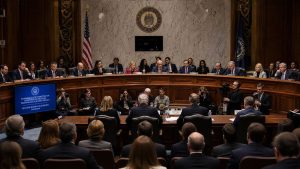
Senate prediction markets integrity concerns have officially reached Capitol Hill, with U.S. Senator Marsha Blackburn announcing a landmark subcommittee hearing set for May 20, 2026. The Commerce Subcommittee on Consumer Protection, Technology, and Data Privacy will convene what marks the first time any Senate body has directly addressed the proliferation of prediction markets and their growing intersection with professional and amateur sports wagering across the United States.
The hearing arrives at a critical juncture for the American gambling industry, which has ballooned into a $165 billion market since the Supreme Court struck down the Professional and Amateur Sports Protection Act in 2018. With 39 states and the District of Columbia now permitting some form of legal sports wagering, federal lawmakers are increasingly concerned that oversight has failed to keep pace with the sheer speed of market expansion. Prediction platforms like Kalshi and Polymarket have added another layer of complexity, blurring the boundary between financial speculation and traditional sports betting in ways that existing state-level frameworks were never designed to address.
Key Witnesses and Industry Stakeholders Weigh In
Blackburn has assembled a panel that spans regulators, industry executives, and integrity specialists. Scheduled witnesses include Bill Miller, president and CEO of the American Gaming Association, who is expected to advocate for clearer federal guardrails that distinguish licensed sportsbooks from unregulated prediction platforms. Mary Beth Thomas, executive director of the Tennessee Sports Wagering Council, will provide a state-level regulatory perspective, while Scott Sadin, co-founder of Integrity Compliance 360, will address the technical mechanisms available for detecting suspicious wagering patterns across both prediction and traditional betting markets.
Former U.S. Representative Patrick McHenry, now a senior advisor for the Coalition for Prediction Markets, rounds out the witness list. McHenry is expected to argue that prediction markets serve a distinct economic function and should not be shoehorned into the same regulatory category as licensed sportsbooks. That tension — whether prediction platforms represent a novel financial instrument or a rebranded gambling product — sits at the core of the senate prediction markets integrity debate and will likely dominate the hearing’s three-hour window.
The $165 Billion Question: Where Does Oversight Begin?
The AGA’s lobbying disclosures paint a revealing picture of how high the stakes have climbed. The association spent $730,000 in Q1 2026 alone — its heaviest single-quarter lobbying expenditure in over a year — covering three overlapping issues: the sports betting excise tax, the Event Contract Enforcement Act, and the Prediction Markets are Gambling Act. That last piece of proposed legislation would ban live-event wagering on prediction platforms and require federal approval before any state could authorize such markets, effectively drawing a regulatory line that Kalshi and its peers have lobbied aggressively to prevent.
Separately, the Prediction Markets Security and Integrity Act of 2026 is circulating among Senate cosponsors. If passed, the bill would mandate that prediction platforms operating in the U.S. register with either the CFTC or a newly created oversight body and comply with the same anti-money-laundering and consumer-protection standards that licensed sportsbook operators already face. The AGA has publicly endorsed the bill’s framework, arguing that a level regulatory playing field is essential for maintaining senate prediction markets integrity and consumer trust.
Senate Already Taking Action: Members Ban Themselves from Prediction Markets
In a move that underscored the urgency of the issue, senators voted unanimously in late April 2026 to ban themselves and their staff from participating in prediction markets. The self-imposed prohibition was framed as a conflict-of-interest safeguard — legislators who will shape the rules governing these platforms should not be profiting from them simultaneously — but it also served as a powerful signal that Congress views prediction markets as a category warranting serious regulatory attention, not a niche curiosity.
For operators and affiliates across the broader iGaming ecosystem, the hearing’s outcome could reshape revenue models overnight. A federal classification of prediction markets as gambling products would trigger licensing, taxation, and compliance obligations that many current platforms are structurally unprepared to absorb. Conversely, a lighter-touch framework that treats prediction markets as CFTC-regulated financial instruments would preserve the status quo and keep state gaming commissions on the sidelines. Players in regulated Asian markets like Malaysia have already navigated similar definitional battles around skill-based wagering categories, offering a useful reference point for U.S. policymakers.
What Senate Prediction Markets Integrity Oversight Means for 2026 and Beyond
The May 20 hearing is unlikely to produce immediate legislation, but the testimony it generates will feed directly into multiple bills already in committee markup. Blackburn has stated publicly that her subcommittee intends to produce a recommendation framework before the August recess, which would give both the Senate Commerce Committee and the Senate Banking Committee time to reconcile competing approaches before the 2026 midterm election cycle consumes the legislative calendar. The Commerce Committee’s official announcement makes clear that the scope extends beyond sports, encompassing broader questions about how digital wagering platforms of all kinds should be supervised at the federal level.
For the American gambling industry, the message from Washington is unmistakable: the era of fragmented state-by-state oversight governing a $165 billion market without federal coordination is drawing to a close. Whether the resulting framework strengthens senate prediction markets integrity through strict classification or allows innovation through flexible regulation, operators on every side of the debate should prepare for a fundamentally different compliance environment by early 2027.






Are Crypto Casino Payments Anonymous? (Reality vs Myth)

How Crypto Casino Payments Work: Wallets, Confirmations, and Risk Checks

Sent Crypto to Wrong Network? What You Can Recover and What You Can’t

Crypto Casino Withdrawal Fees Explained: What You Actually Pay

Why Is My Crypto Withdrawal Taking So Long? (Confirmations, Network, Fees)

USDT vs Bitcoin Casino Withdrawals: Speed, Fees & Risks Compared

Crypto vs E-Wallet Casino Withdrawals: Speed, Fees, Risks Compared

Responsible Gambling Controls in Regulated Markets (UK/AU) and How They Work

Name Mismatch: Why Wallet/Bank Names Must Match Casino Profiles
