
FinTech
What is Balance Transfer for Credit Card in Malaysia (2026)

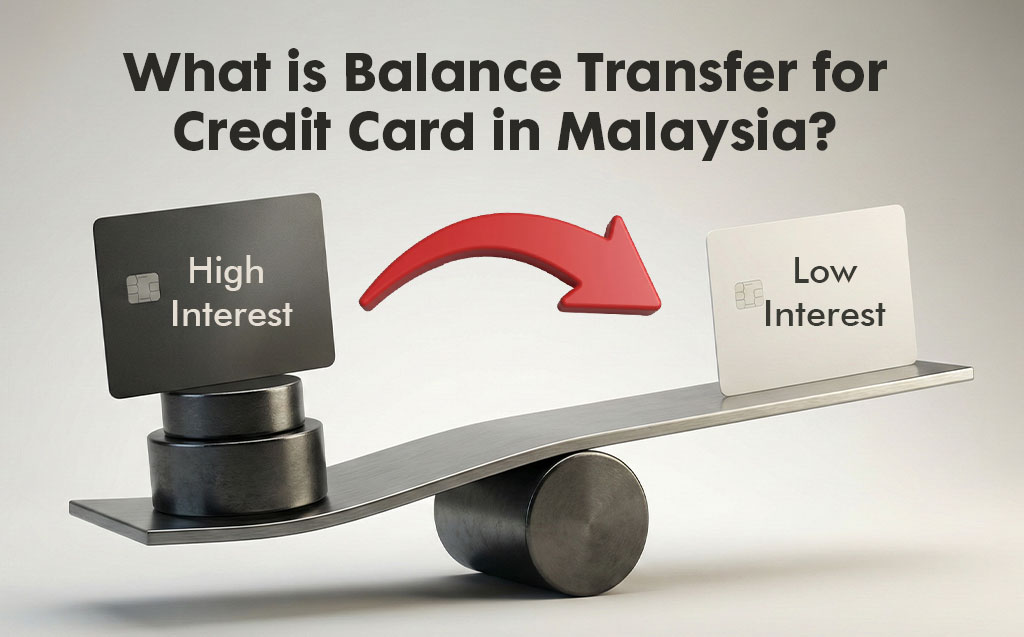 [Updated on: 26 January 2026] Credit card interest in Malaysia compounds quietly and relentlessly. Miss one payment, roll a balance for a few months, and the interest starts working against you faster than most people realise. That’s why balance transfer credit card plans have become a common escape route for Malaysians trying to regain control of their debt.
At their best, balance transfers can slow down interest, stabilise monthly cash flow, and give borrowers a clear timeline to become debt-free. At their worst, they simply reshuffle debt while creating a false sense of progress. The difference lies in understanding how these plans actually work, how banks structure their costs, and how human behaviour interacts with “low interest” offers.
This guide explains balance transfer credit card plans in Malaysia for 2026 in plain language. It focuses on how they work, when they help, when they don’t, and what to watch out for—without sales language or promotional bias. You can also check out Cashback Credit Card Guide in 2026 for more perks.
Key Takeaways
- A balance transfer moves debt; it does not erase it.
- “0%” headlines can still cost money through fees and restrictions.
- The cheapest plan is not always the safest one psychologically.
- Missed payments can cancel benefits and worsen your credit profile.
- Balance transfers work best when paired with spending discipline.
What Is a Balance Transfer Credit Card?
A balance transfer credit card plan allows you to move existing credit card debt—usually from one or more cards—to another card under a special repayment structure. The aim is to reduce interest costs or make repayment more predictable.
What a balance transfer does:
- Consolidates one or more card balances into a single repayment plan.
- Changes how interest or fees are applied.
- Restructures repayment into a defined period.
What a balance transfer does not do:
- Forgive debt.
- Reduce principal automatically.
- Fix overspending habits.
In Malaysia, balance transfers are regulated products offered by BNM-regulated banks and appear on monthly statements like any other card transaction. They are not refinancing in the legal sense, and they are not personal loans. Think of them as a repayment arrangement layered on top of a credit card.
This distinction matters because credit cards still come with revolving limits, utilisation ratios, and behavioural risks that personal loans don’t. If you’re looking to spread repayments over a longer period with fixed instalments, a Personal Loan may be more suitable due to its structured, non-revolving repayment setup.
Two Main Balance Transfer Models in Malaysia
Balance transfer plans in Malaysia generally fall into two broad structures. The headline marketing may vary, but the mechanics are usually one of the following.
One-Time Handling Fee (Low or “0%” Interest)
In this model, the bank charges a single upfront handling fee for transferring your balance, after which the transferred amount carries low or zero interest for a fixed period.
From the bank’s perspective, revenue is earned immediately through the fee rather than monthly interest. From the borrower’s perspective, this can feel cheaper and simpler, especially for short-term debt.
This model tends to fit borrowers who:
- Can repay the balance within a shorter timeframe.
- Have stable income and predictable cash flow.
- I want to minimize the total interest cost.
However, the “0%” label can be misleading. The handling fee is effectively prepaid interest. If you exit early or miss a payment, the plan may revert to standard card interest—details that must be verified in the T&Cs.
Monthly Instalment Balance Transfer
This model converts your balance into fixed monthly instalments, sometimes with interest, sometimes with a structured fee embedded into the instalments.
Banks earn money here through:
- Instalment interest, or
- Embedded fees spread across the tenure.
This structure provides psychological relief because the monthly amount is fixed and visible, similar to a loan repayment. It often suits borrowers who:
- Need longer repayment periods.
- Prefer certainty over flexibility.
- Are managing larger balances.
The trade-off is usually higher total cost over time and stricter early settlement clauses. Some instalment plans penalise early repayment, which surprises many users.
Balance Transfer Program Comparison
Before looking at specific bank plans, it helps to compare balance transfer models conceptually across three dimensions.
Total cost:
Shorter tenures with upfront fees often cost less overall, but only if you complete the plan as intended. Longer installment plans may cost more in total but feel easier to manage month to month.
Cash-flow relief:
Instalment plans offer immediate relief by lowering required monthly payments. Fee-based plans may still require relatively high monthly repayments.
Psychological risk:
Lower monthly payments can encourage complacency. Some borrowers feel “safe” and resume spending, which defeats the purpose of the transfer.
There is no universally “best” structure. The right plan depends as much on behaviour as on mathematics.
Balance Transfer Programs in 2026
In 2026, balance transfer credit card plans remain a prominent tool in Malaysia’s consumer debt landscape. Most major banks continue to offer both fee-based and instalment-based options, often refreshed with promotional periods.
At a high level, you will see:
- Fixed tenures rather than open-ended offers.
- Promotional messaging around low or zero interest.
- Clear eligibility conditions tied to credit limits and repayment history.
What you should not assume:
- That “0%” means zero cost.
- Those benefits persist after missed payments.
- That new spending is always allowed during the plan.
Marketing focuses on interest rates. Risk hides in the fine print: missed payment clauses, early settlement terms, and whether your available credit is locked during the plan.
1) Maybankard Balance Transfer Program

- Tenures / pricing shown:
- 6m: 0% p.a. + 1.88% one-time upfront fee
- 12m: 0% p.a. + 3% one-time upfront fee
- 24m: 4.5% p.a. (no upfront fee)
- 36m: 4.95% p.a. (no upfront fee)
- Min transfer: RM1,000 (most plans), RM2,000 for 36m
- Max transfer: up to RM50,000 (6–12m) / up to 90% credit limit (9/24/36m)
- Eligibility / scope: can transfer from up to 3 other banks; principal Maybank cardholders only
RM10,000 cost illustration (approx)
- Option A (6m, 0% + 1.88% fee): fee RM188 → total RM10,188 → ~RM1,698.00/month
- Option B (36m, 4.95% p.a.): ~RM299.48/month, total ~RM10,781.44
Best for
- You want a big-bank option with both: short 0%+fee and longer low p.a. choices up to 36 months.
Watch-outs
- RinggitPlus lists “Minimum Monthly Payment: 100% of outstanding amount” for this programme—so assume you must keep up with the programme instalment in full (don’t rely on “minimum payment” behaviour).
2) BSN Balance Transfer Programme
- Tenures / pricing shown:
- 6m: 0% p.a. + 1.99% upfront fee
- 12m: 0% p.a. + 3.99% upfront fee
- 36m: 3.99% p.a. (no upfront fee)
- 48m: 4.99% p.a. (no upfront fee)
- Min transfer: from RM500 (short tenures), higher mins for longer tenures
- Max transfer: up to 80% of available BSN credit limit
- Early termination fee listed: None
RM10,000 cost illustration (approx)
- 12m (0% + 3.99% fee): fee RM399 → total RM10,399 → ~RM866.58/month
- 36m (3.99% p.a.): ~RM295.20/month, total ~RM10,627.03
Best for
- You want up to 48 months (longer runway than many banks), and you’re okay with either upfront-fee 0% (short tenure) or low p.a. (long tenure).
Watch-outs
- RinggitPlus notes a minimum monthly repayment option (5%), but warns any remaining balance can be subject to prevailing credit card interest rates.
- Max transfer is tied to your BSN credit limit, so if your BSN limit is < RM12,500, you may not be able to move a full RM10,000 (because 80% cap).
3) UOB Balance Transfer

- Tenures / pricing shown: 6m and 12m
- 6m: 0% p.a. + no upfront fee (promotion note for new cardholders)
- 12m: 0% p.a. + 1% upfront fee (promotion note for new cardholders)
- For existing cardholders, the page also shows 3% (6m) / 4% (12m) upfront fee options
- Min transfer: RM1,000
- Max transfer: minimum RM1,000 or up to 80% of credit/available limit (whichever is lower)
- If fail to repay within tenure: page says balance may be charged 18% p.a.
- Early settlement: the same page mentions RM100 if you cancel card / terminate the programme
RM10,000 cost illustration (approx)
- New cardholder 6m (0% + 0% fee): total RM10,000 → ~RM1,666.67/month
- New cardholder 12m (0% + 1% fee): fee RM100 → total RM10,100 → ~RM841.67/month
Best for
- You want a short, clean payoff plan (6–12 months) and you can qualify for the lower upfront-fee promo described for new cardholders.
Watch-outs
- This programme is short-tenure (6–12 months shown), so monthly instalments can be high.
- The RinggitPlus page contains both “Early Termination Fee: None” and a note about RM100 early settlement fee—treat the bank T&C/PDS as final.
4) RHB Smart Move Balance Transfer

- Tenures / pricing shown (no upfront fee):
- 6m: 4.88% p.a.
- 12m: 4.88% p.a.
- 24m: 5.88% p.a.
- 36m: 6.88% p.a.
- Min transfer: RM1,000
- Max transfer: up to 80% of available credit limit
- Late / missed installment warning: skipping a month can trigger 18% p.a. on outstanding + 1% fee (max RM100)
- Promo note: “new-to-bank” rates stated as valid until 31 Dec 2026
RM10,000 cost illustration (approx)
- 36m @ 6.88% p.a.: ~RM308.22/month, total ~RM11,096.01
- (If you can do shorter) 12m @ 4.88% p.a.: ~RM855.53/month, total ~RM10,266.30
Best for
- You prefer no upfront fee and you’re okay with a clear p.a. interest structure (especially if you’ll pay down faster).
Watch-outs
- With interest-based plans, missing instalments is costly per the page’s warning (18% p.a. + late fee).
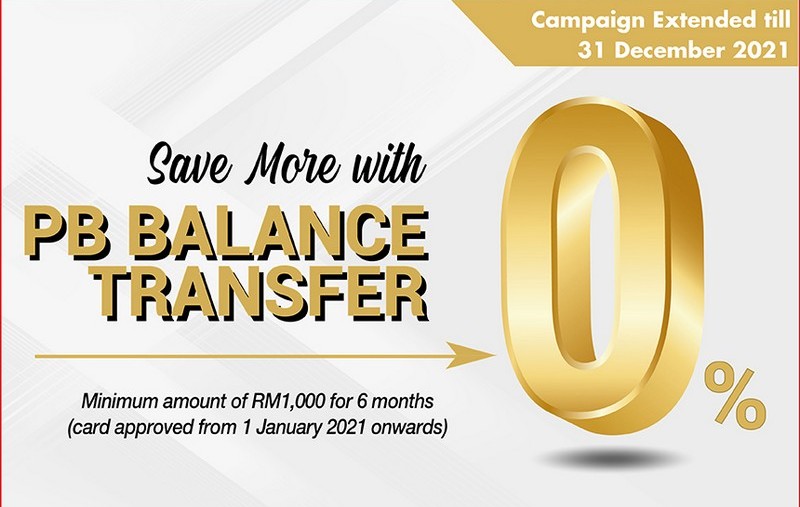
5) Public Bank Balance Transfer
- Tenures / pricing shown: all are 0% p.a. with a one-time upfront interest/management fee:
- 6m: 1% fee
- 12m: 2.5% fee
- 24m: 4.5% fee
- 36m: 6.5% fee
- 48m: 9.5% fee
- Min transfer: RM1,000
- Max transfer: up to 80% of total available credit limit
- Repayment rule: the contracted BT instalment is billed in full as part of minimum payment
- If not paid in full: tiered 15%–18% p.a. may apply on unpaid BT amount
- Late repayment: 18% p.a. + late payment penalty 1% or RM10 (cap RM100)
- Eligibility: not open to supplementary cardholders (principal only)
RM10,000 cost illustration (approx)
- 48m (0% + 9.5% fee): fee RM950 → total RM10,950 → ~RM228.13/month
- 12m (0% + 2.5% fee): fee RM250 → total RM10,250 → ~RM854.17/month
Best for
- You want the lowest monthly burden among your 5 options (48 months), and you’re okay paying a bigger one-time fee to “buy time.”
Watch-outs
- This is one of the clearest pages about “what happens if you don’t pay the instalment in full” (15%–18% p.a. + late charges), so it’s a plan where repayment discipline matters.
How We Evaluate Balance Transfer Plans
From an editorial and consumer-first perspective, balance transfer plans are evaluated on three core dimensions.
First, the total repayment amount matters more than headline rates. A plan that looks cheap but collapses under a missed payment is not consumer-friendly.
Second, clarity of terms is critical. Plans that clearly state fees, repayment mechanics, and penalties reduce the risk of unpleasant surprises.
Third, behavioural risk must be considered. The safest plan is often the one that prevents re-borrowing and forces disciplined repayment, even if it looks less attractive on paper.
How to Choose the Right Balance Transfer Plan
Total Cost vs Monthly Relief
Many Malaysians focus on reducing monthly payments, especially when cash flow is tight. While this is understandable, it can lead to choosing longer tenures that increase total cost.
Ask yourself: are you solving a cash-flow problem or a debt problem? If income disruption is temporary, a shorter, cheaper plan may be safer.
Tenure Length vs Discipline Risk
Long tenures feel comfortable. They also make it easier to forget the debt exists. Short tenures are uncomfortable but force faster resolution.
There is no moral judgment here—only trade-offs. Choose the longest tenure you need, not the longest you can get.
Early Settlement Clauses
Many borrowers assume early repayment is always good. In some balance transfer installment plans, early settlement can trigger fees or forfeiture of benefits. If early repayment flexibility matters to you, verify this upfront.
Effect on Credit Utilisation & CCRIS
Balance transfers usually consume part—or all—of your credit limit. This affects utilisation ratios, which are reflected in CCRIS. High utilisation is not automatically bad, but missed payments are.
A balance transfer done responsibly can stabilise your profile. Done poorly, it can worsen it.
How Monthly Installments Are Actually Calculated
Balance transfer repayments are not mysterious once you break them down.
They consist of:
- Principal: the transferred balance.
- Handling fee or interest: depending on plan type.
- Tenure: how long the plan runs.
Example: RM10,000 Short Tenure
If RM10,000 is transferred into a short-term plan with an upfront fee, the effective cost is mostly paid at the start. Monthly payments are higher, but the plan finishes faster.
Example: RM10,000 Long Tenure
A longer installment plan spreads repayment over more months. Monthly payments drop, but total repayment may rise.
What most people misunderstand:
Lower monthly payments do not mean lower cost. They often mean longer exposure to risk.
Risks of Balance Transfer Credit Cards
Balance transfers do not fail because of mathematics. They fail because of behaviour.
Resetting debt without fixing spending habits is the most common problem. Once interest pressure eases, some borrowers resume spending, rebuilding balances on old cards.
Credit limit lock-up can also cause stress. When most of your limit is tied to a transfer, emergencies may push you back into high-interest borrowing elsewhere.
Missed payments are especially dangerous. One missed installment can cancel promotional terms and reapply standard card interest.
Finally, re-borrowing on freed-up cards defeats the entire purpose of consolidation.
Common Mistakes Malaysians Make with Balance Transfers
Many treat balance transfers as free money rather than structured repayment. Others ignore early settlement penalties, assuming flexibility that doesn’t exist.
Some repeatedly roll balances from one plan to another, creating a cycle of “temporary relief” without progress. Others mix balance transfers with new discretionary spending, effectively increasing total debt.
The common thread is overconfidence.
Balance Transfer vs Other Debt Options
Balance Transfer vs Personal Loan
Balance transfers usually offer lower short-term costs but higher behavioural risk. Personal loans provide structure and separation from spending but may cost more.
Balance Transfer vs Debt Consolidation Loan
Debt consolidation loans formalise repayment and often remove access to revolving credit. Balance transfers keep credit lines open, for better or worse.
Balance Transfer vs Minimum Payments
Minimum payments are the most expensive option over time. Balance transfers usually win here—if used correctly.
Conclusion
A balance transfer credit card plan is a tool. Used carefully, it can buy time, reduce interest, and create a clear path out of debt. Used casually, it can delay the problem while making it bigger.
You should consider a balance transfer if you:
- Have existing high-interest card debt.
- Can commit to fixed monthly repayments.
- Are willing to pause discretionary spending.
You should avoid it if you:
- Struggle with spending control.
- Cannot meet minimum payments consistently.
- Expect the plan itself to “solve” the debt.
A Simple 3-Step Checklist
- Calculate total repayment, not just monthly installments.
- Read missed payment and early settlement clauses.
- Freeze new spending during the plan.
FAQ
What is a balance transfer on a credit card?
It is the movement of existing credit card debt into a new repayment structure, usually with lower interest or fixed monthly instalments.
Do balance transfers hurt credit scores in Malaysia?
They can affect credit utilisation, but they do not automatically hurt your score. Missed payments and late repayments are what cause real damage.
Is it good to do a balance transfer?
It can be useful when paired with spending discipline and a clear repayment plan. Without discipline, it may only delay the debt problem.
What are the disadvantages of balance transfer?
Common disadvantages include behavioural risk, potential penalties for missed or early payments, and a false sense of financial relief.
Is balance transfer better than a personal loan?
Sometimes. It depends on the total cost, your repayment discipline, and how certain you are about meeting fixed monthly commitments.


Car Insurance Policy Basics: Key Terms Every Car Owner Should Understand

What Is Travel Insurance and How Does It Work When You’re Abroad?

What is Balance Transfer for Credit Card in Malaysia (2026)

Pivots to Your Technical Business That Just Make Sense Heading Into 2026

When to Use Antihistamine Eye Drops: A Guide to Allergy Eye Relief

Best 5 Travel Credit Card for Air Miles in Malaysia 2026

Best 5 Petrol Credit Card Malaysia 2026: Cashback Guide

Best Cashback Credit Card in Malaysia 2026: Petrol, Groceries, Utilities

PayNow vs DuitNow for Tourists: How to Pay in Singapore and Malaysia
